Fifty Days of Silence
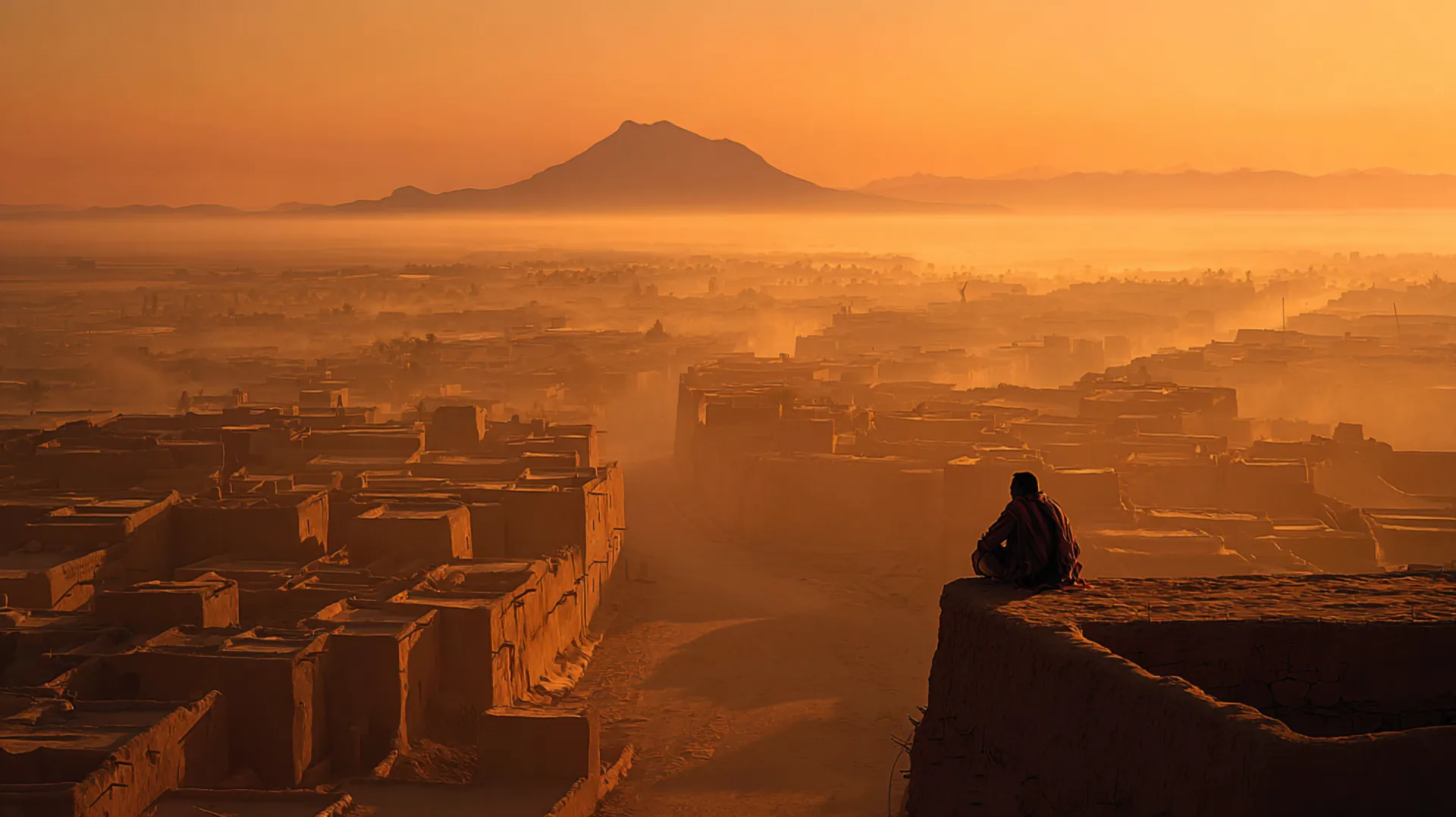
From the summit of Jabal al-Sila, a voice hurls two words across the morning air of Medina — and a man who has endured fifty days of total silence falls into prostration before the sentence is even complete.
9 AH · 630 – 632 CE
The mountain catches the voice before the man himself can be seen. From the summit of Jabal al-Sila, a figure cups his hands around his mouth and hurls two words across the still morning air of Medina: “Ya Ka’b ibn Malik — Abshir!” Be happy. That is all. No explanation, no elaboration. Just abshir — and for Ka’b, sitting alone on his rooftop after fifty days of silence so total it had become a kind of death, those two syllables contain the entire world.
He falls into prostration before the sentence is even complete. There is only one thing that could warrant such joy. Only one verdict that could break this unbearable suspension. Allah has spoken.
The Man Before the Mistake
To understand why those fifty days nearly destroyed Ka’b ibn Malik (may Allah be pleased with him), you must first understand who he was before them. He was no marginal figure, no recent convert swept up in the momentum of a growing community. Ka’b was among the earliest of the Ansar to embrace Islam — a man who had pledged allegiance to the Prophet Muhammad (peace be upon him) at the Second Pledge of al-Aqabah, standing among that elite band of roughly seventy souls who invited the Messenger of God to their city before the Hijrah had even begun.
He fought in every major engagement the Muslims undertook. At the Battle of Uhud, when the tide turned catastrophically against the believers, Ka’b did something extraordinary: he exchanged his own armor for that of the Prophet, making himself a target so that the enemy would mistake him for the Messenger. He absorbed eleven wounds that day — spears, arrows, javelins — each one a testament to a love so fierce it bordered on recklessness.
He was also one of Medina’s finest poets, though his verse was not of the biting satirical kind that made Hassan ibn Thabit famous. Ka’b’s poetry was martial and inspirational — the kind that stiffened spines before battle and reminded men what they were fighting for. In the hierarchy of the Ansar, he occupied a place of genuine distinction.
And so when the call came for the expedition to Tabuk in the scorching summer of the ninth year after Hijrah, there was no question that Ka’b would go. He had always gone. His entire biography was a record of showing up.
Scholarly Note
This hadith is classified as Muttafaq alayhi — agreed upon by both Imam al-Bukhari and Imam Muslim. Al-Bukhari places it in the chapter on the Battle of Tabuk, while Imam Muslim positions it in the chapter on Tawbah (repentance) and its blessings. Ibn Ishaq and al-Tabari also record the narration. The first-person nature of Ka’b’s account — narrated to his son Abdullah ibn Ka’b ibn Malik in his old age — gives it an emotional vividness rare in hadith literature.
The Unraveling
What happened next is one of the most psychologically honest passages in all of prophetic biography. Ka’b does not dress it up. Speaking to his son decades later, blind and elderly, he lays bare the anatomy of his failure with a precision that still stings across fourteen centuries.
He had the means. He tells his son plainly that he had never been wealthier, never been more prepared. He had two riding camels — a luxury most companions could not claim. The army was assembling. The Prophet had made the destination clear, an unusual step taken because of the extreme difficulty of the journey north to the Byzantine frontier in the brutal July heat. Every able-bodied Muslim was expected to march.
And Ka’b kept saying tomorrow.
Each morning he woke intending to prepare. Each evening he returned having done nothing. The days bled into one another with a terrible ease. He watched the army gather, watched the provisions being loaded, watched thirty thousand men organize themselves for the longest march in the community’s history — and still he did not move. When the Prophet finally departed, Ka’b walked through the markets of Medina and was struck by a sickening recognition: the only people he could see around him were those known for their hypocrisy, or those too physically weak to travel.
He was neither. He had no excuse. And he knew it.
Even then, the procrastination continued. He told himself he could catch up — the army was slow, burdened with supplies and men on foot. A man on a fast camel could close the distance in days. But the days passed, and the distance grew, and finally the window closed entirely. Ka’b ibn Malik, veteran of every battle, hero of Uhud, poet of the Muslim cause, had simply failed to show up.
The Psychology of Procrastination in Ka'b's Account
What makes Ka’b’s narration so enduring is its unflinching honesty about the mechanics of spiritual failure. He does not describe a dramatic crisis of faith or a calculated act of rebellion. He describes something far more common and far more insidious: the slow erosion of resolve through delay.
The pattern he outlines — waking each day with good intentions, finding the day consumed by inaction, reassuring himself that tomorrow will be different — is recognizable to anyone who has ever postponed a difficult obligation. The scholars have drawn from this account a powerful warning against taswif (procrastination), noting that Ka’b’s failure was not born of disbelief or even conscious disobedience, but of a comfort that dulled his urgency. He had wealth, health, and time — and paradoxically, these very blessings became the instruments of his undoing.
It is also significant that Ka’b narrates this failure to his own son, decades after the events. As Dr. Yasir Qadhi observes, this reflects a remarkable transparency: a father telling his child about his worst mistake, not to boast or to wallow, but to teach. The lesson is not in the sin itself but in how one responds to it — and Ka’b’s response would become one of the most celebrated examples of repentance in Islamic history.
The Return and the Reckoning
When the army returned from Tabuk — having reached the frontier without engagement, as the Byzantine forces declined to confront them — the Prophet sat in the mosque to receive those who had stayed behind. The hypocrites came first, over eighty of them, each armed with elaborate excuses and ready oaths. They swore by Allah that they had legitimate reasons. The Prophet accepted their words outwardly, sought forgiveness for them, and left their inner states to God.
Then Ka’b entered.
He greeted the Prophet, and the Prophet smiled — but it was, Ka’b recalls with painful clarity, the smile of an angry person. Then came the question that cut through every possible evasion: “Didn’t you have a riding camel?”
The question was devastating precisely because of its simplicity. It was not an accusation — it was an invitation to be honest about the obvious. You had the means. You had no excuse. What happened?
Ka’b stood at a crossroads that would define the rest of his life. He was, by his own admission, an eloquent man — a poet whose craft was the arrangement of words into persuasive beauty. He knew he could construct an excuse that would satisfy the Prophet in the moment. He had watched eighty men do exactly that just minutes earlier.
But something stopped him. He thought of Allah — not the Prophet’s judgment, but God’s. He could perhaps fool a man, even the best of men. He could not fool the One who sees what the heart conceals.
And so Ka’b told the truth. He said, simply, that he had no excuse. He had been capable. He had been prepared. He had simply not gone.
The Prophet’s response was measured and grave. He did not explode in anger, nor did he immediately forgive. He said: “As for this man, he has spoken the truth.” Then he told Ka’b to leave and wait until Allah Himself rendered a verdict.
Fifty Days of Silence
What followed was one of the most extraordinary punishments in the history of the early Muslim community. The Prophet commanded the entire population of Medina — every man, woman, and child — to cease all social interaction with Ka’b and with two other companions who had similarly confessed without excuse: Hilal ibn Umayyah and Murara ibn al-Rabi al-Waqifi (may Allah be pleased with them both). Both were men of Badr — veterans of the most sacred battle in Islamic history — and their honest confession had placed them in the same suspended state as Ka’b.
Scholarly Note
The identification of Ka’b’s two companions varies slightly across sources. The hadith in Bukhari and Muslim names them as Hilal and Murara. Both were participants in the Battle of Badr, which Ka’b himself notes with significance — he describes them as “rajulayni salihayni Badriyyayni,” two righteous men who had fought at Badr. Their status as Badri veterans made their failure all the more shocking and their punishment all the more sobering.
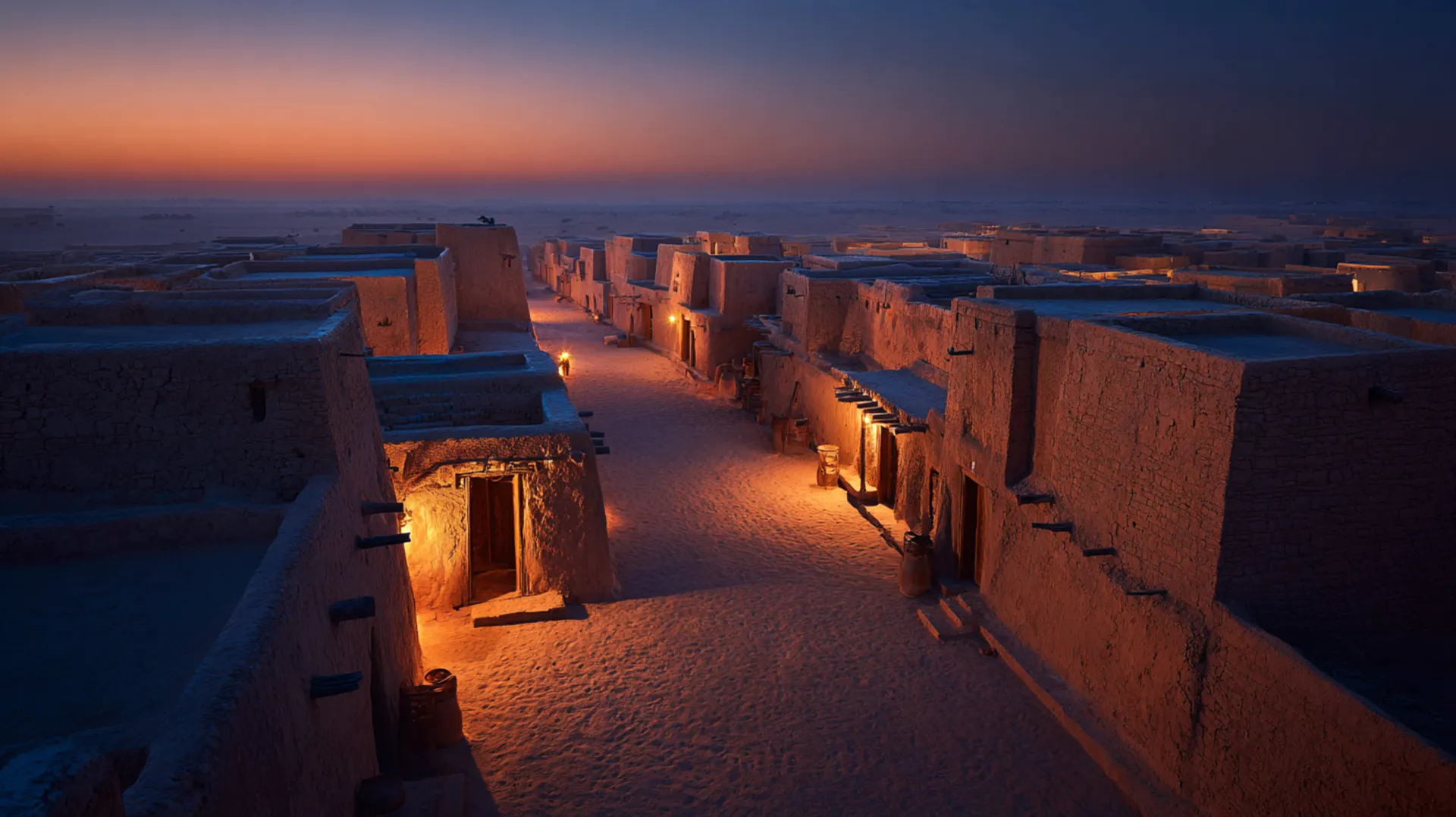
The boycott was total. No one returned Ka’b’s greetings of peace. No one spoke to him in the market. No one acknowledged his presence in the mosque. The earth, as the Quran would later describe it, seemed to close in upon him despite its vastness. His own soul became a cage.
Ka’b monitored the Prophet during prayers, desperate for any sign of recognition. He would position himself where he could observe whether the Prophet glanced in his direction, and he noticed — with a mixture of agony and hope — that the Prophet would sometimes look toward him from the corner of his eye, only to turn away when Ka’b looked back. Even in enforcing the punishment, the Prophet’s compassion flickered at the edges.
The loneliest moment came when Ka’b could bear it no longer and went to the garden of his cousin and closest friend, Abu Qatadah. He climbed over the garden wall — a semi-private space where he had always been welcome — and found Abu Qatadah sitting there. He said salaam. Abu Qatadah did not respond. He asked again, his voice breaking: “I ask you by Allah, don’t you know me to be a man who loves Allah and His Messenger?” Silence. He asked a third time, begging now, tears streaming. Abu Qatadah, bound by the Prophet’s command, could only murmur into the air without looking at him: “Allah and His Messenger know best.”
Ka’b wept and fled back over the wall.
The Letter from the Enemy
It was during these darkest days that a test of an entirely different nature arrived. A Nabataean Christian merchant, come to Medina from the north to sell grain, made his way through the market asking for Ka’b ibn Malik by name. He carried a letter from the King of the Ghassanids — the very people against whom the Tabuk expedition had been launched.
The letter was silk-smooth in its sympathy: “We have heard that your companion has treated you coldly. Allah would not allow you to live in a place where you are inferior and your rights are lost. Join us, and we will console you.”
The implications were staggering. The Ghassanid king clearly had intelligence sources in Medina — perhaps among the hypocrites — and he saw in Ka’b’s isolation an opportunity to recruit a high-value defector. A poet, a warrior, a man of standing among the Ansar, now abandoned by his own community: what better trophy for a rival power?
Ka’b’s response was immediate and instinctive. He recognized the letter for what it was — another layer of the divine test — and walked directly to his oven and burned it. He did not deliberate. He did not keep it as leverage or insurance. He incinerated it, removing even the possibility of second-guessing himself later.
This moment reveals something profound about Ka’b’s character. His sin had been one of laziness, not of disloyalty. The foundations of his faith were unshaken. When the real test came — not the slow erosion of procrastination but a sharp, clear choice between Islam and apostasy — he did not waver for a single breath.
The Verdict Descends
On the fiftieth day, the final blow fell. A messenger arrived from the Prophet with a new command: Ka’b was to separate from his wife. Not divorce — simply cease all intimate contact and send her to her parents’ home.
Ka’b asked only one question: “Should I divorce her, or simply send her away?” When told it was separation, not divorce, he complied immediately. He was now truly alone — no community, no companion, no wife. The isolation was almost total.
The wife of Hilal ibn Umayyah, however, went to the Prophet and explained that her husband was an elderly man with no one to serve him. She asked permission to continue caring for him, and the Prophet granted it, noting that Hilal’s condition was different — he was old and incapacitated, and there was no concern about marital relations.
Then, on the morning of the fiftieth day, after the Fajr prayer, the Prophet made the announcement. And a man raced to the top of Jabal al-Sila and shouted those two words that Ka’b had been dying to hear.
Abshir.
The Morning Everything Changed
Ka’b fell into prostration on his rooftop — a sajdah of gratitude so spontaneous that it required no preparation, no ablution, no formal prayer. It was the body’s instinctive response to mercy so overwhelming that standing seemed impossible.
The news spread through Medina like light. People poured out of their homes and rushed in every direction — some toward Hilal, some toward Murara, some scrambling up the mountain to shout the news to Ka’b before anyone else could reach him. A horseman galloped from the mosque to Ka’b’s house, racing against the voice that had already carried from the mountaintop.
Ka’b was so overcome with joy that he gave the horseman the only thing he had — the garment off his back. In fifty days of giving charity in desperate hope of divine mercy, he had depleted every coin he possessed. He had nothing left but the clothes he wore. He gave his outer garment to the rider and had to knock on his neighbor’s door to borrow something to wear to the mosque.
The poverty of this moment is staggering. Here was a man who had begun the ordeal wealthier than he had ever been, and he now stood borrowing a shirt from his neighbor. Every dirham had gone to charity — not because anyone commanded it, but because a man drowning in guilt will grasp at any rope that might pull him toward God’s mercy.
When Ka’b entered the mosque, the entire community was gathered in celebration. Companions embraced him in waves. And then Talhah ibn Ubaydillah (may Allah be pleased with him) — one of the great Muhajirin, one of the ten promised Paradise — rose from his seat, rushed to Ka’b, and shook his hand with congratulations. Of all the Muhajirin, he was the only one who stood.
Ka’b never forgot it. Narrating the story forty years later, blind and elderly, he paused to say: “I will never forget this gesture from Talhah.” One act of warmth, one moment of standing when others remained seated — and it burned itself into a man’s memory for a lifetime.
Before the Prophet
The Prophet’s face, Ka’b recalls, was radiant with joy — “bright like the full moon,” a description found in multiple hadith traditions describing the Prophet’s happiness. The Prophet spoke words that Ka’b would carry to his grave:
“Be happy and rejoice, for this is the best day you have seen since the day your mother gave birth to you.”
Ka’b asked the question that reveals the theological clarity of the early companions: “Is this from you, or from Allah?” The Prophet replied: “No — it is from Allah.”
The distinction mattered immensely. The Prophet’s personal forgiveness would have been meaningful. But divine forgiveness — forgiveness inscribed in revelation that would be recited until the end of time — that was something beyond any human pardon. Ka’b understood, as he had understood from the very beginning, that his account was ultimately with God, not with any man, however beloved.
Overwhelmed with gratitude, Ka’b declared that he would give away everything he owned in charity. The Prophet’s response was characteristically wise: “Keep some of your wealth. That is better for you.” Even in a moment of spiritual ecstasy, practical wisdom prevailed. Ka’b agreed to retain his share from Khaybar — a productive plot of land that would sustain his family — and gave away the rest.
Then Ka’b made a vow: “Allah saved me through truthfulness. As part of my repentance, I promise never to tell a lie as long as I live.”
Speaking to his son decades later, he confirmed: “By Allah, I do not know any Muslim whom Allah tested more severely with the temptation to lie than He tested me. And I have never told a deliberate lie from that day until this.” Then, with the humility that characterized his entire narration, he added: “And I hope that Allah will protect me for the remainder of my days.”
He was seventy-seven years old. He had perhaps a year left to live. And still he would not presume upon the future.
The Quranic Seal
The verses that descended to seal Ka’b’s forgiveness are preserved in Surah At-Tawbah:
“And [He also forgave] the three who were left behind, until when the earth closed in on them in spite of its vastness, and their own souls became straitened to them, and they were certain that there is no refuge from Allah except in Him. Then He turned to them so they could repent. Indeed, Allah is the Accepting of Repentance, the Merciful.” — At-Tawbah (9:118)
Ka’b himself provided a crucial tafsir of this verse. The phrase “alladhina khullifu” — commonly translated as “those who were left behind” — does not, he insisted, refer to their remaining behind from the expedition. It refers to the fact that their verdict was suspended. They were placed in limbo. The hypocrites had received the Prophet’s outward acceptance and were left to Allah’s judgment. But these three were given no verdict at all — neither acceptance nor condemnation — until Heaven itself spoke.
Scholarly Note
Ka’b’s interpretation of khullifu in Surah At-Tawbah (9:118) is significant and is recorded in both Bukhari and Muslim. He explicitly corrects the common understanding, explaining that the word refers not to their physical absence from Tabuk but to the suspension of their case — they were “set apart” from both the forgiven and the condemned, left in a state of agonizing uncertainty until divine revelation resolved their fate. This first-person tafsir from one of the verse’s own subjects carries exceptional weight in Quranic exegesis.
Ka’b then reflected on what he considered the second greatest blessing of his life after Islam itself: the moment he chose not to lie. “By Allah,” he told his son, “Allah never bestowed upon me a blessing greater, after Islam, than the fact that I did not lie to the Messenger of Allah that day. For if I had lied, I would have been destroyed as the hypocrites were destroyed.” He then recited the Quranic description of those hypocrites — the verses in At-Tawbah (9:95-96) that call them rijs (filth) and consign them to the fire — and the contrast needed no further commentary.
The Eternal Lessons
The Prophet himself had taught the principle that Ka’b’s life now embodied. As recorded in Sahih al-Bukhari and Sahih Muslim:
“I command you to be truthful, for truthfulness leads to righteousness, and righteousness leads to Paradise. A person continues to be truthful and seeks truthfulness until he is written with Allah as a siddiq. And I warn you against lying, for lying leads to wickedness, and wickedness leads to the Hellfire. A person continues to lie and seeks falsehood until he is written with Allah as a liar.”
And in another hadith preserved in Musnad Ahmad and Sunan al-Tirmidhi, the Prophet said:
“Whoever seeks the pleasure of Allah even if it angers the people, Allah will suffice him from the people. And whoever seeks the pleasure of the people at the expense of Allah’s displeasure, Allah will leave him to the people.”
Ka’b’s story is the living proof of both principles. He chose truth when a lie would have been easier. He chose God’s judgment when human approval was within reach. And in the end, he received both — the pleasure of Allah inscribed in eternal scripture, and the love of a community that celebrates his name to this day.
The hypocrites, who chose the opposite path, received the opposite fate. They are remembered only as a category of disgrace, their individual names largely forgotten, their oaths exposed as hollow by the very God they swore upon.
Ka’b ibn Malik died during the caliphate of Mu’awiyah ibn Abi Sufyan (may Allah be pleased with him), at the age of seventy-seven or seventy-eight. He had gone blind in his final years — the same eyes that once scanned the Prophet’s face for a flicker of recognition during those fifty days of silence now saw nothing at all. But he had seen enough. He had seen the full moon of the Prophet’s joy on the morning of his forgiveness. He had seen the truth of a principle he would carry to his grave: that honesty before God, however painful, is the only path that does not end in ruin.
As the community that had boycotted him rushed to embrace him, as Talhah rose and the horseman galloped and the voice echoed from the mountain, Ka’b understood something that transcends his century and ours: that the darkest hour is not the end of the story. It is the moment just before dawn.
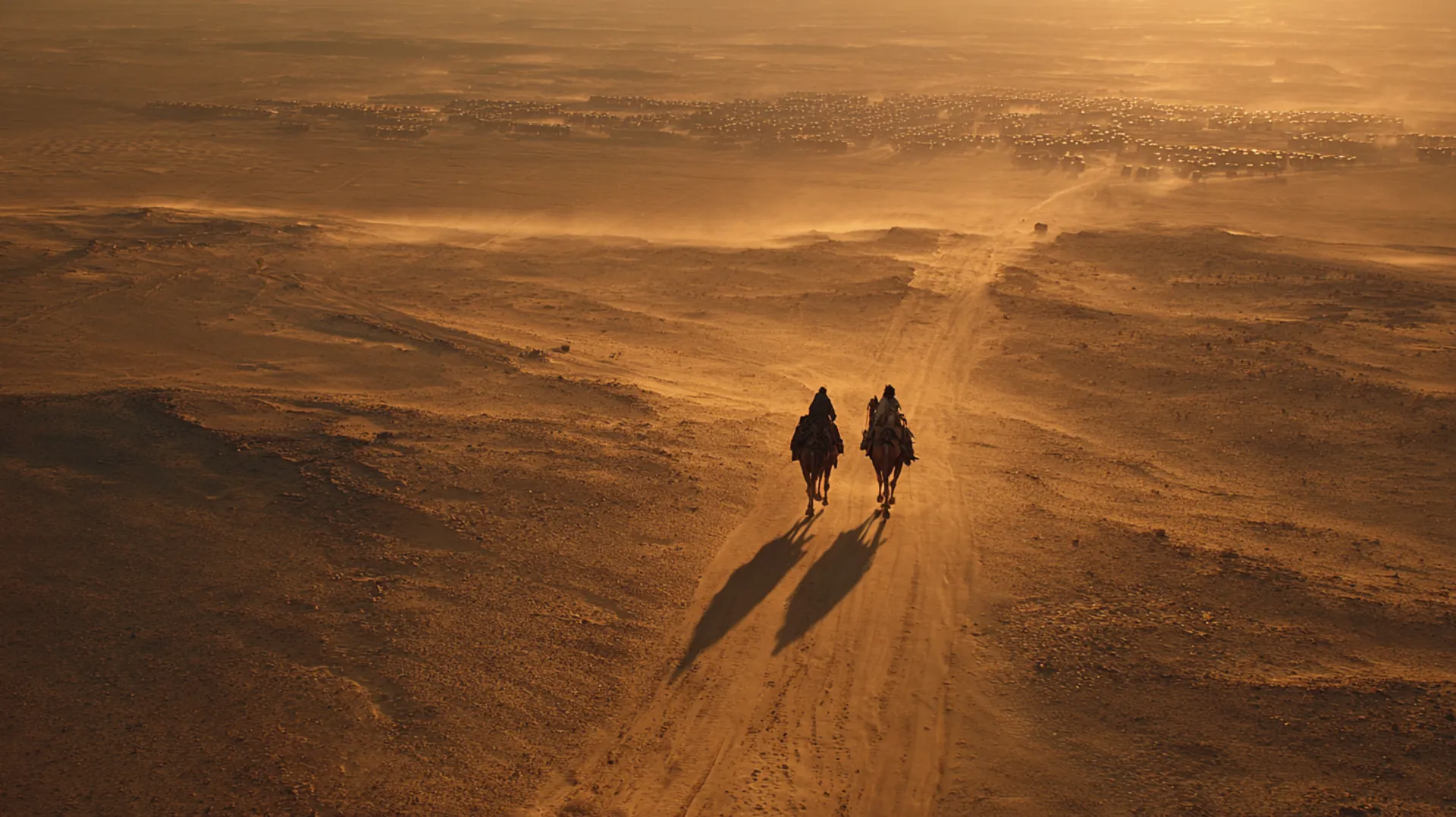
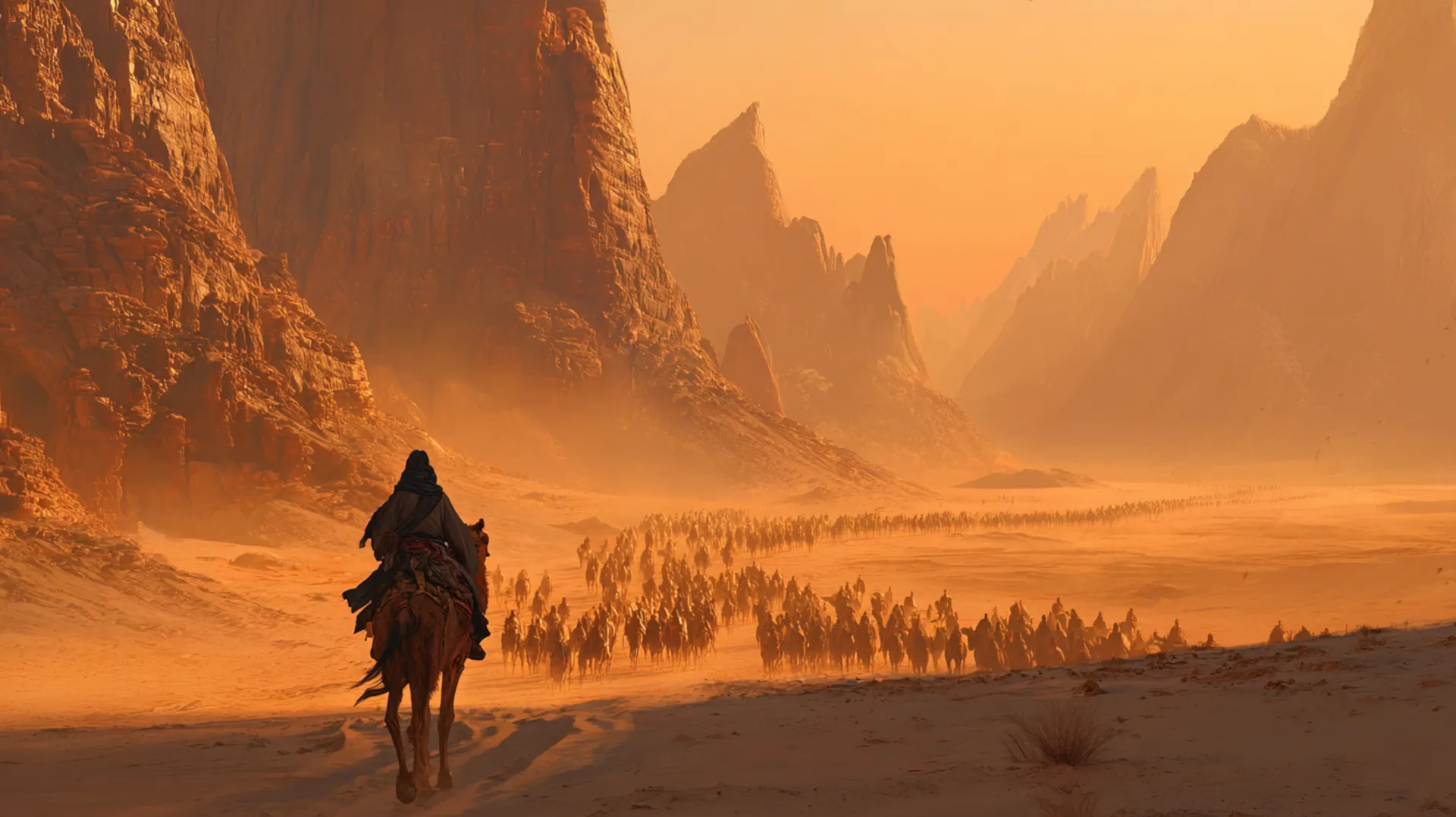
But the expedition to Tabuk had generated more than the story of Ka’b’s repentance. It had also revealed the extraordinary depths of sacrifice the companions were willing to reach — and the extraordinary depths of treachery the hypocrites were willing to plumb. In the next chapter, we turn to both: the breathtaking generosity that funded the largest army in early Islamic history, and the sinister construction of a mosque built not for worship, but for war.
Quranic References
Continue Your Journey
Cite this Narrative
APA
SeerahQuest. (2026). Fifty Days of Silence. *SeerahQuest: The Eternal Narrative*. https://seerahquest.com/chapters/story-of-kab-ibn-malik-and-the-boycott Adapted from Yasir Qadhi's Seerah Series, Episode 89.
MLA
"Fifty Days of Silence." *SeerahQuest: The Eternal Narrative*, 2026, https://seerahquest.com/chapters/story-of-kab-ibn-malik-and-the-boycott. Adapted from Yasir Qadhi's Seerah Series, Episode 89.
Chicago
"Fifty Days of Silence." *SeerahQuest: The Eternal Narrative*. Accessed April 3, 2026. https://seerahquest.com/chapters/story-of-kab-ibn-malik-and-the-boycott. Adapted from Yasir Qadhi's Seerah Series, Episode 89.
Install SeerahQuest — read chapters offline, anytime.