The Judgment from Above Seven Heavens
The armor is not yet unbuckled when the command arrives — the angels have not put down their weapons, and Allah orders His Messenger to march again before he has drawn a single breath of peace.
5-6 AH · 627 CE
The armor is not yet unbuckled when the command arrives.
It is the morning after the storm — the morning after the divine wind tore through the Confederate camp, scattering ten thousand warriors like chaff across the Najd. The trenches of Madinah still scar the earth in long, dark furrows. Somewhere in the city, a man who has not slept in twenty-five days reaches for the buckle at his shoulder, and the weight of iron begins to lift. For the first time in nearly a month, there is silence where there was siege. The Prophet Muhammad (peace be upon him) is home.
Then Jibrīl appears.
He comes not in the form of the stranger this time, but — as the Companions will later report — in the likeness of Diḥya al-Kalbī, the most handsome man in Madinah, riding a white mule through the dusty lanes as though on some unhurried errand. And his message is blunt: the angels have not yet put down their weapons. A new battalion stands ready. And Allah commands His Messenger to march — not tomorrow, not after rest — now — to the fortress of Banū Qurayẓah.
The war is not over. It has only changed shape.
The March That Could Not Wait
A crier’s voice cuts through the exhausted city: No one is to pray ʿAṣr except at Banū Qurayẓah. The command is absolute. There will be no pause to eat, no hour to tend wounds, no embrace of family. The fortress of the Qurayẓah lies roughly an hour’s walk southeast of Madinah’s center, and the afternoon sun is already descending.
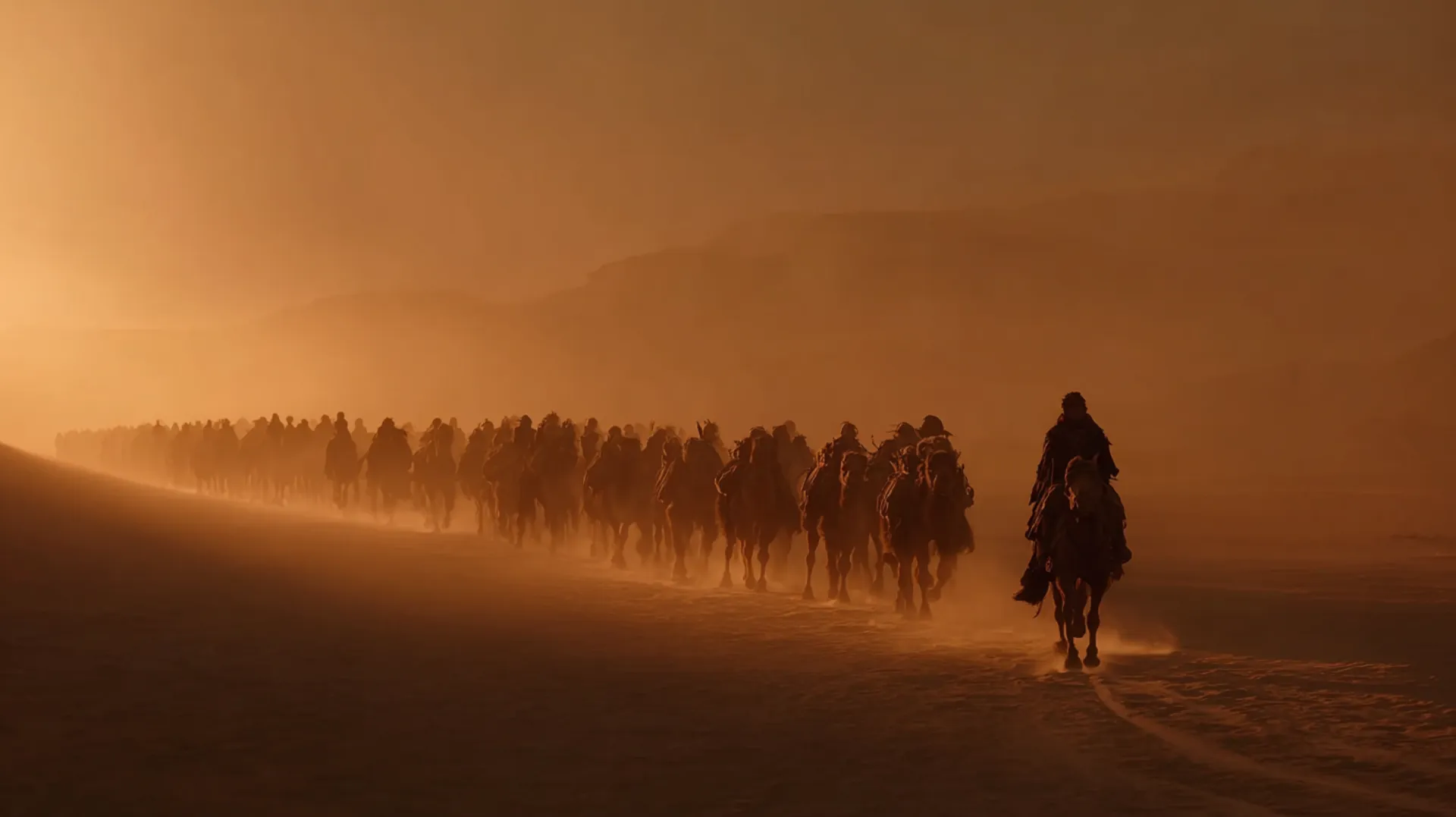
The Companions gather in waves — some immediately, strapping on weapons they had only just set down; others receiving the message late, rousing themselves from the first real sleep they have known in weeks. They leave the city in batches, a long, staggered column of men moving through the date groves toward the stone walls of the last Jewish tribe in Madinah.
And it is here, on this hurried march, that one of the most consequential debates in Islamic jurisprudence unfolds — not in a scholar’s study, but on a dusty road, among soldiers racing against the sun.
The problem is simple: some of the Companions will not reach Banū Qurayẓah before sunset. ʿAṣr time will expire. The Prophet’s command was explicit — pray ʿAṣr there, at the fortress. But what did he mean? Was it a literal injunction, binding regardless of timing? Or was it an emphatic way of saying hurry — move so fast that you arrive before the prayer window closes?
The Companions split into two camps. One group stops on the road and prays ʿAṣr before the sun sets, reasoning that the Prophet could not have intended them to miss the prayer entirely. The other group presses on, arriving after Maghrib and praying ʿAṣr as a made-up prayer, reasoning that his words were clear and must be obeyed to the letter.
When both groups reach the fortress and the matter is brought before the Prophet, the hadith records a response of extraordinary restraint: he does not criticize either party. He simply lets the matter rest.
Scholarly Note
This incident is recorded in multiple authentic collections and is considered muttafaq ʿalayh (agreed upon by al-Bukhārī and Muslim). Some weaker reports add that the Prophet said, “Both of you were correct,” but scholars such as Dr. Yasir Qadhi note this version is not authenticated. The soundly established narration states only that he did not rebuke either group. This distinction matters: it supports the position — held prominently by the Ḥanbalī school of uṣūl al-fiqh — that the ultimate truth in matters of jurisprudence is singular, even when qualified scholars reach different conclusions. The hadith in Ṣaḥīḥ al-Bukhārī states: “If the judge makes ijtihād and is correct, he receives two rewards; if he errs, he receives one reward” — implying that correctness and error are real categories, not interchangeable outcomes.
Literalism and Reason: A Debate Born on a Desert Road
This single incident on the road to Banū Qurayẓah became a foundational case study in uṣūl al-fiqh — the principles by which Islamic law is derived. The two camps among the Companions represent tendencies that would crystallize over centuries into distinct methodological schools: the ahl al-ḥadīth (literalists who prioritize the apparent meaning of texts) and the ahl al-ra’y or ahl al-qiyās (those who employ analogical reasoning and consider the underlying rationale of a command).
The literalist camp held that the Prophet’s words — “No one is to pray ʿAṣr except at Banū Qurayẓah” — constituted an unambiguous directive. One obeys the letter of the command, even if the timing of the prayer lapses. The rationalist camp countered that the Prophet’s intent was urgency, not the nullification of a known obligation; since ʿAṣr prayer has a defined window, and since the Prophet himself would never command its abandonment, the spirit of the command — move quickly — should govern.
Neither group questioned the Prophet’s authority. Neither accused the other of sin. And the Prophet’s silence validated both approaches as legitimate exercises of qualified ijtihād. This episode is cited by scholars across the centuries — from Ibn Taymiyyah to al-Shāṭibī — as proof that sincere scholarly disagreement, when grounded in competence and good faith, is not only tolerable but inherent to the tradition. It is also cited as evidence that the Prophet distinguished between matters requiring explicit correction and one-off situations where clarification would serve no future purpose.
The Fortress and the Flag
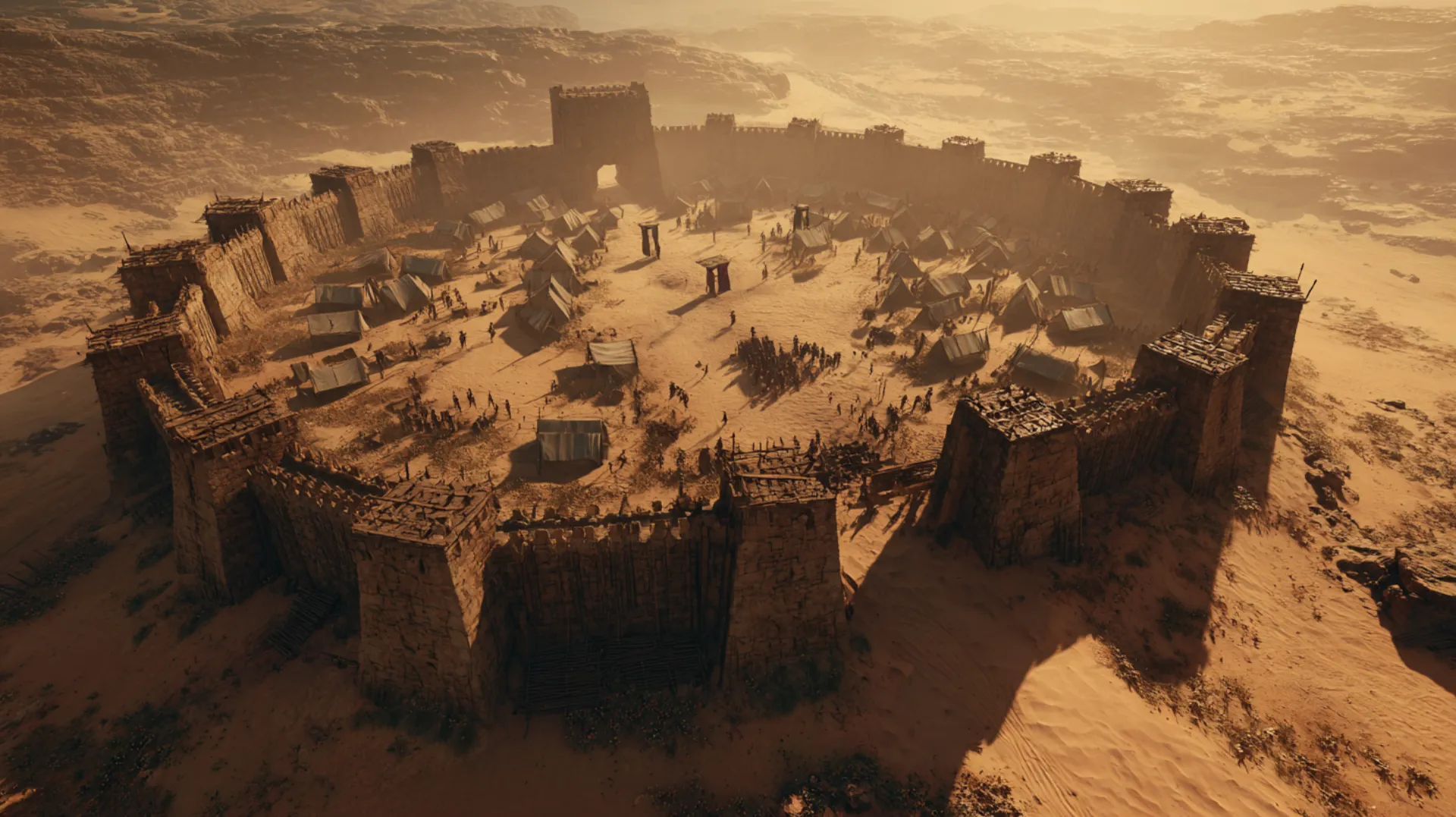
ʿAlī ibn Abī Ṭālib (may Allah be pleased with him) arrives first. He plants the banner of the Muslim army outside the walls of the Qurayẓah fortress — a signal that admits no ambiguity. This is not a diplomatic visit. This is a declaration that the reckoning has come.
The Banū Qurayẓah, watching from their ramparts, respond not with contrition but with venom. Ibn Isḥāq records that they hurled the most vile insults at the Prophet — language so foul that the early historians declined to reproduce it. ʿAlī, hearing every word, rushes out to intercept the Prophet as he approaches, urging him to make camp farther back, away from earshot. The Prophet understands immediately. “Perhaps they are saying things about me that are distressing you?” ʿAlī confirms it. But the Prophet presses forward, setting his camp directly before the fortress gates. He knows this people: they will say such things behind his back, but never to his face.
And so, standing before the sealed walls, he calls out to them: “O people of the Yahūd — has not Allah humiliated you? Has not His anger descended upon you?” Their response is telling: “O Abū al-Qāsim, you were never one who acted foolishly.” It is a plea wrapped in flattery — be merciful, be reasonable, be the wise man we know you to be. But the time for negotiation on their terms has passed. The Prophet demands unconditional surrender. They refuse.
The siege begins.
Twenty-Five Days
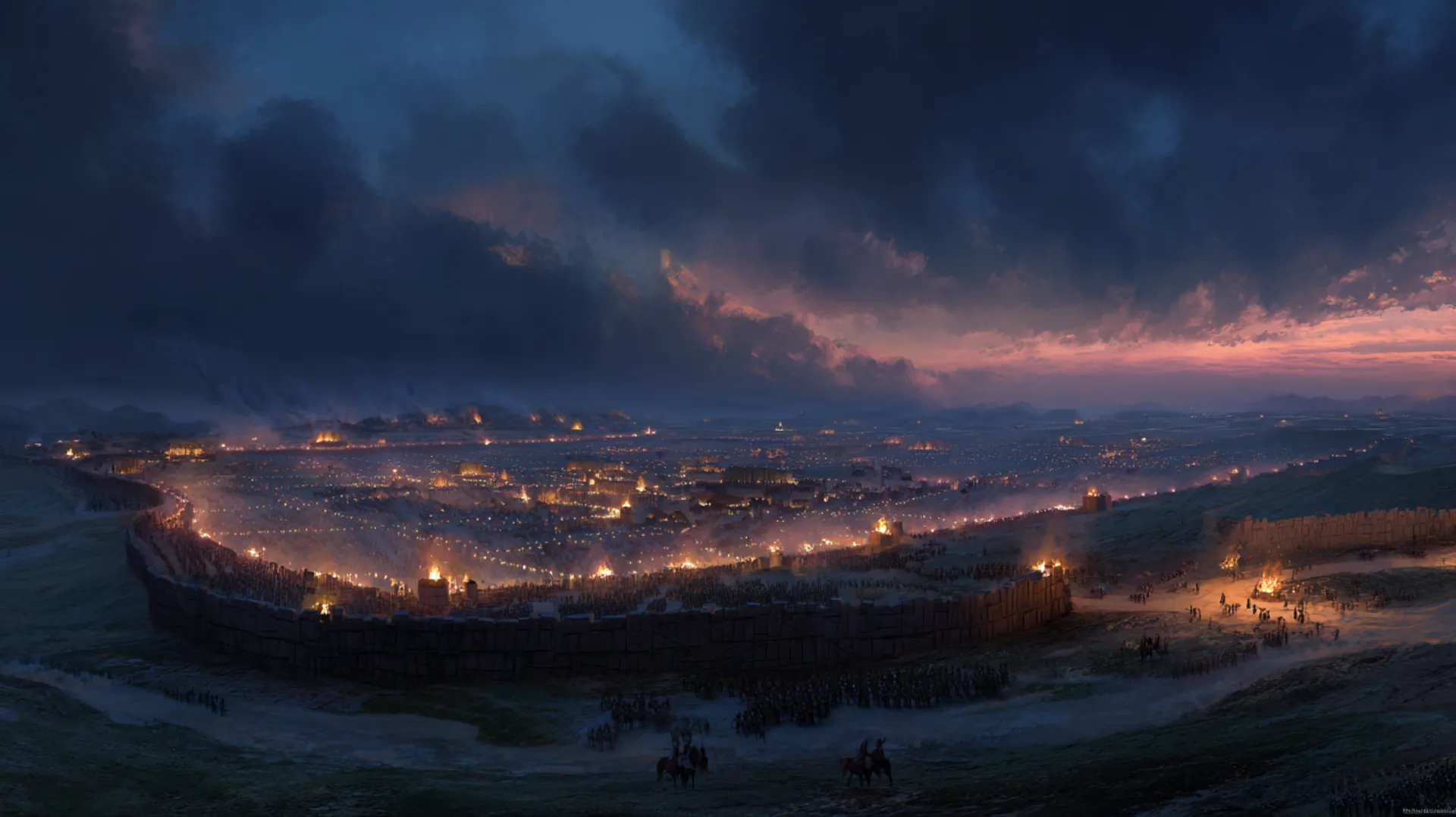
Days bleed into weeks. The Muslim army encircles the fortress completely, cutting off all supply lines. There is no battle in the conventional sense — the Qurayẓah are outnumbered roughly two to one, sealed inside their own walls, and the Muslims lack the siege technology to breach the fortifications. It becomes a war of attrition, of patience, of dwindling water and mounting dread.
Inside the fortress, Ka’b ibn Asad — the chieftain who had allowed himself to be persuaded by Ḥuyayy ibn Akhṭab into breaking the treaty with Madinah — now faces the consequences of that decision. As the siege grinds on, he presents his people with three options.
The first: accept Islam. Ka’b speaks with a candor that borders on confession. “We all know,” he tells his tribe, “that this is the prophet foretold in our books.” It is a remarkable admission — not challenged by a single member of the tribe. Not one voice rises to say, No, we still have doubts. The secret everyone knew is spoken aloud at last. But they refuse. “We will never leave our religion,” they say. “We will never abandon the Torah.”
The second option is grimmer: kill their own families so they have nothing left to lose, then charge out with drawn swords in a final, suicidal assault. The odds are not impossible — one to two, perhaps one to three. But slaughtering their own women and children is a line they will not cross.
The third: launch a surprise attack on the Sabbath, the one day the Muslims would never expect them to fight. Ka’b’s people recoil. Break the Sabbath? The cornerstone of their religious identity? They refuse this too.
Ka’b’s frustration boils over. Ibn Isḥāq records his bitter words: “Since the day your mothers gave birth to you, not one of you has ever made a single decision.”
They send an emissary — Shaʿs ibn Qays — to negotiate. First offer: let them leave as the Banū Naḍīr had left, taking their families and whatever their camels could carry. The Prophet refuses. Second offer: keep everything, just let them leave with their lives. The Prophet refuses again. Only unconditional surrender.
Scholarly Note
The Prophet’s insistence on unconditional surrender, while refusing to offer false terms, is noted by seerah scholars as a demonstration of a core Islamic principle: treachery is impermissible even against an enemy. He could have offered lenient terms to coax them out and then imposed a harsher sentence — a tactic common in ancient warfare. Instead, he made his position clear, refusing to employ deception. This principle is consistently emphasized across the seerah, from the treaties with the Quraysh to the conduct at Khaybar.
Abu Lubābah’s Slip
The Qurayẓah make one more request: send us Abū Lubābah. He is of the Aws — the Arab tribe that had been allied with the Qurayẓah in the days before Islam. Abū Lubābah had been their friend, their drinking companion, a man who had walked freely through their fortress in the old days. The Prophet permits him to go.
Inside, Abū Lubābah is engulfed by the desperate — women weeping, children clinging, old men pleading. His heart softens. When they ask whether they should surrender, he says yes — but then makes a gesture across his throat, indicating what he believes awaits them. He will later say: “By Allah, my feet had not moved from where I stood before I knew that I had betrayed Allah and His Messenger.”
He does not return to the Prophet. He does not return to the siege camp. He walks straight to the mosque in Madinah and ties himself to a pillar — the pillar that would come to be known as the Pillar of Repentance — and swears an oath: he will not move from this spot until Allah accepts his tawbah. He will never again set foot in the land where he disobeyed.
When the Prophet learns what has happened, he says: “Had he come to me, I would have sought Allah’s forgiveness for him. But now that he has made this oath, I cannot intervene.” A nadhr — a solemn vow to Allah — must be fulfilled.
Abū Lubābah remains tied to that pillar for days — perhaps more than a week. His daughter comes to untie him for prayers, then he ties himself back. Then one morning at Fajr, the Prophet wakes up laughing. Umm Salama (may Allah be pleased with her) asks what has brought him joy so early. He tells her: Allah has accepted the repentance of Abū Lubābah. She rushes out — her quarters still have a door opening directly onto the mosque, as the commandment of ḥijāb has not yet been revealed — and delivers the news. The other Companions move to untie him, but Abū Lubābah refuses anyone’s hand except the Prophet’s. And so, before leading the dawn prayer, the Prophet himself unties the ropes.
“And there are others who have acknowledged their sins — they have mixed righteous deeds with others that are bad. Perhaps Allah will turn to them in forgiveness. Indeed, Allah is Forgiving and Merciful.”
This verse — al-Tawbah (9:102) — is said to have been revealed concerning Abū Lubābah. Al-Ḥasan al-Baṣrī called it the most hopeful verse in the entire Qur’an: a promise that those who acknowledge their sins, who have mixed good deeds with bad, may yet find Allah’s mercy. Another verse, al-Anfāl (8:27), is also associated with this incident: “O you who believe, do not betray the trust of Allah and the Messenger.”
The Man Who Kept His Covenant
On the night of the twenty-fourth day — the eve of surrender — a figure slips out of the fortress in the darkness. The sentries challenge him. He gives his name: ʿAmr ibn Saʿdah.
Standing guard is Muḥammad ibn Maslamah (may Allah be pleased with him), one of the most trusted Companions — the same man who had led the mission against Kaʿb ibn al-Ashraf, the same man who would later be entrusted with overseeing Madinah during the Prophet’s absence at Tabūk. He recognizes the name. ʿAmr ibn Saʿdah was one of perhaps only one or two members of Banū Qurayẓah who had vocally refused to participate in the betrayal. He had told his people plainly: I will never break the promise made to Muḥammad.
He had not accepted Islam. He remained a Jew. But he had honored his word.
Muḥammad ibn Maslamah faces a decision in the darkness — detain him, kill him, or let him pass. He murmurs a quiet prayer: O Allah, overlook my overlooking of him. And he lets ʿAmr walk free.
ʿAmr makes his way to Madinah, spends the night, and by morning he has vanished. No one knows where he went. No one ever sees him again. When the Prophet learns what happened, he does not rebuke Muḥammad ibn Maslamah. Instead, he says: “That was a man whom Allah saved because of his honesty — because he fulfilled his part of the covenant.”
This single episode — a man who was not Muslim, who belonged to the tribe under sentence, who walked free because he had kept his word — illuminates the principle that would govern everything that followed. These people were not punished for who they were. They were punished for what they did.
The Judgment of Saʿd
The morning of the twenty-fifth day, the message comes: the Qurayẓah will surrender. Unconditionally.
Immediately, the Aws — the tribe that had been allied with the Qurayẓah for generations — surround the Prophet, pleading for mercy. One of them makes the argument that must have seemed irresistible: “You spared the Khazraj’s allies — the Banū Naḍīr. You did it at the request of ʿAbdullāh ibn Ubayy. Spare our allies as well.” The logic is tribal, ancient, deeply human. But the distance between what the Banū Naḍīr had done and what the Qurayẓah had done is vast — the Naḍīr had plotted assassination; the Qurayẓah had opened a second front during the most existential threat Madinah had ever faced, when ten thousand enemies stood at the gates and the hearts of believers, as the Qur’an itself describes, rose to their throats.
The Prophet offers a compromise that is also a test: “Will you be satisfied if one of your own decides their fate?” The Aws agree eagerly. He names Saʿd ibn Muʿādh (may Allah be pleased with him) — their own chieftain, their leader, the man they trust above all others.
Saʿd is dying. The arrow wound he sustained during the Battle of the Trench — a deep laceration to the medial arm vein — has not healed. For twenty-five days he has lain in the medical tent of Rufaydah, the volunteer nurse who cared for the wounded, bleeding slowly and continuously. They bring him on a mule, bandaged and pale, and the Aws crowd around him as he rides, whispering urgently: Remember the old days. Remember our friendships. Remember — the Prophet chose you because he expects mercy.
Saʿd’s response silences them: “Now is the time for Saʿd to not care about the criticism of any critic when it comes to Allah and His Messenger.”
The Aws understand. Some of them begin to weep.
When Saʿd arrives, the Prophet tells the gathered Anṣār: “Stand up for your leader” — Qūmū ilā sayyidikum. It is the only recorded instance in the entire seerah where the Prophet orders others to rise in honor of someone’s arrival.
Scholarly Note
This command — qūmū ilā sayyidikum — recorded in both al-Bukhārī and Muslim, creates an apparent tension with another authenticated hadith: “Whoever loves that people stand up for him, let him prepare his seat in the Fire of Hell.” Imam al-Nawawī and other scholars reconcile these by distinguishing between habitual expectation of standing (which is condemned) and a one-time gesture of honor for a specific occasion — such as greeting a returning traveler or, in this case, honoring a dying man who is about to render a momentous judgment. The Prophet himself stood to greet his daughter Fāṭimah when she visited after an absence.
Saʿd turns first to his own people: “Do you swear by Allah that you will accept whatever verdict I give?” They swear. Then he turns toward the Prophet — and lowers his gaze, unable to look directly at him out of reverence — and says quietly: “And you as well?” The Prophet affirms: whatever Saʿd decides will stand.
Without hesitation — for he has had twenty-five days of bleeding and prayer to consider this — Saʿd delivers his judgment: the men of Banū Qurayẓah are to be executed, their property distributed, and their women and children taken captive.
The Prophet’s response is immediate and unequivocal: “You have decreed upon them the judgment of Allah from above the seven heavens.”
The Reckoning
The sentence is carried out. The men are led in groups to trenches dug in a plot of land belonging to a woman of the Banū Najjār. The historical sources give varying numbers for those executed.
Scholarly Note
Ibn Isḥāq, considered the most authoritative early seerah source, gives a range of six to seven hundred, noting that some narrators “exaggerated” the figure to eight or nine hundred. A hadith in the collection of Imam Aḥmad mentions approximately four hundred. The exact number remains uncertain, but all sources agree it was the entire adult male population of the tribe. The criterion for adulthood was physical maturity — the young boy Aṭiyyah al-Quraẓī later narrated that he was spared because he had not yet reached puberty.
Ḥuyayy ibn Akhṭab — the Naḍīrite leader whose arrogance and scheming had brought the Qurayẓah to this end — is led out in his finest garment, a red silk embroidery tied tightly to his body with cords so that no one could strip it from his corpse. As he passes the Prophet, he declares: “By Allah, I have never regretted my enmity toward you.” Then, in a phrase that echoes with terrible self-awareness, he says: “Whomever Allah has humiliated, that is the one who is truly humiliated.” He turns to his people and tells them not to grieve — this is the decree Allah has written for the Children of Israel. Then he lowers his neck.
Ka’b ibn Asad — the reluctant chieftain, the man who had to be persuaded into betrayal, who had tried to offer his people three ways out and been refused each time — is more subdued. The Prophet asks him: “Why did you not benefit from the advice of Ibn Kharāsh?” — apparently a rabbi of their own who had predicted the coming of the Prophet and urged them to follow him. Ka’b answers: “I swear by the Torah, it is true — he told us this. And were it not that the Yahūd would say I converted out of fear of death, I would have followed you even now. But I die upon the faith of my people.”
Only one woman is executed — a woman who had killed a Companion during the siege by dropping a grinding stone from the fortress wall. ʿĀ’ishah (may Allah be pleased with her) later recalled sitting with this woman among the captives, marveling at how she laughed and joked even as her people were being led away, until someone called her name and she stood calmly and said: “I am to be killed. I did something.” ʿĀ’ishah would say she never ceased to be amazed at that woman’s composure in the face of death.
Among the stories that emerge from the aftermath is that of Thābit ibn Qays ibn Shammās (may Allah be pleased with him) and Zubayr ibn Baṭṭah, an elderly man of the Qurayẓah. Years earlier, during the pre-Islamic wars of Buʿāth — the bitter conflicts between the Aws and the Khazraj — Zubayr had saved Thābit’s life. Now Thābit goes to the Prophet and asks for Zubayr to be spared. The Prophet grants it. Zubayr asks for his family — granted. His property — granted. But when Zubayr asks after his friends and kinsmen and learns they are gone, he says: “What is the purpose of life without companions?” He refuses the reprieve and chooses to join his people in death.
The captured wealth is enormous: fifteen hundred swords, fifteen hundred shields, two thousand spears, three hundred suits of armor, and vast herds of livestock. For a community that had struggled to arm itself since Badr, this is transformative. A large quantity of wine is also found — and destroyed. It is at this point, according to one account, that the rules of ghanīmah distribution are formalized: a mounted warrior receives three shares (one for the expense of his horse, two for himself), a foot soldier receives one, and one-fifth of the total goes to the Islamic state as prescribed in Sūrat al-Anfāl.
The Weight of History
This chapter of the seerah carries a weight that fourteen centuries have not diminished. The execution of the Banū Qurayẓah remains one of the most scrutinized events in the Prophet’s life — invoked by critics, defended by scholars, and wrestled with by every generation of Muslims who encounter it.
What the sources make clear, however, is the chain of causation. This was not a punishment for belief or ethnicity. The Qurayẓah had renewed their treaty with Madinah multiple times — including once during the siege of the Banū Naḍīr, when the Prophet himself had gone to their fortress to reaffirm their commitment. They had broken that covenant at the most catastrophic possible moment, opening a second front when ten thousand enemy soldiers stood at the trench. The survival of every man, woman, and child in Madinah had hung in the balance. ʿAmr ibn Saʿdah — a Jew who kept his word — walked free. Those who converted were spared. Those for whom personal intercession was made were given the chance to live. The judgment fell on those who had committed what every civilization in human history has recognized as the gravest of wartime offenses: treason during an existential siege.
Saʿd ibn Muʿādh, the man who rendered that judgment, would not live much longer. The wound that had been bleeding for nearly two months would finally claim him — but not before the Prophet himself declared that his verdict was the verdict of God. It is a statement that closes the door on second-guessing, even as it opens a vast space for reflection on justice, mercy, and the terrible clarity that comes when a community’s survival is at stake.
The last Jewish tribe of Madinah is gone. The city’s internal threats are extinguished. But the ripples of this event will travel far — to Khaybar, where the exiled leaders of the Banū Naḍīr still plot; and soon, to a fortress in that distant oasis, where a man named Salām ibn Abī al-Ḥuqayq will learn that the long arm of Madinah’s justice reaches further than he imagined.
Quranic References
Continue Your Journey

Cite this Narrative
APA
SeerahQuest. (2026). The Judgment from Above Seven Heavens. *SeerahQuest: The Eternal Narrative*. https://seerahquest.com/chapters/siege-of-banu-qurayzah-part-1 Adapted from Yasir Qadhi's Seerah Series, Episode 61.
MLA
"The Judgment from Above Seven Heavens." *SeerahQuest: The Eternal Narrative*, 2026, https://seerahquest.com/chapters/siege-of-banu-qurayzah-part-1. Adapted from Yasir Qadhi's Seerah Series, Episode 61.
Chicago
"The Judgment from Above Seven Heavens." *SeerahQuest: The Eternal Narrative*. Accessed April 3, 2026. https://seerahquest.com/chapters/siege-of-banu-qurayzah-part-1. Adapted from Yasir Qadhi's Seerah Series, Episode 61.
Install SeerahQuest — read chapters offline, anytime.