Across the Sea to Justice
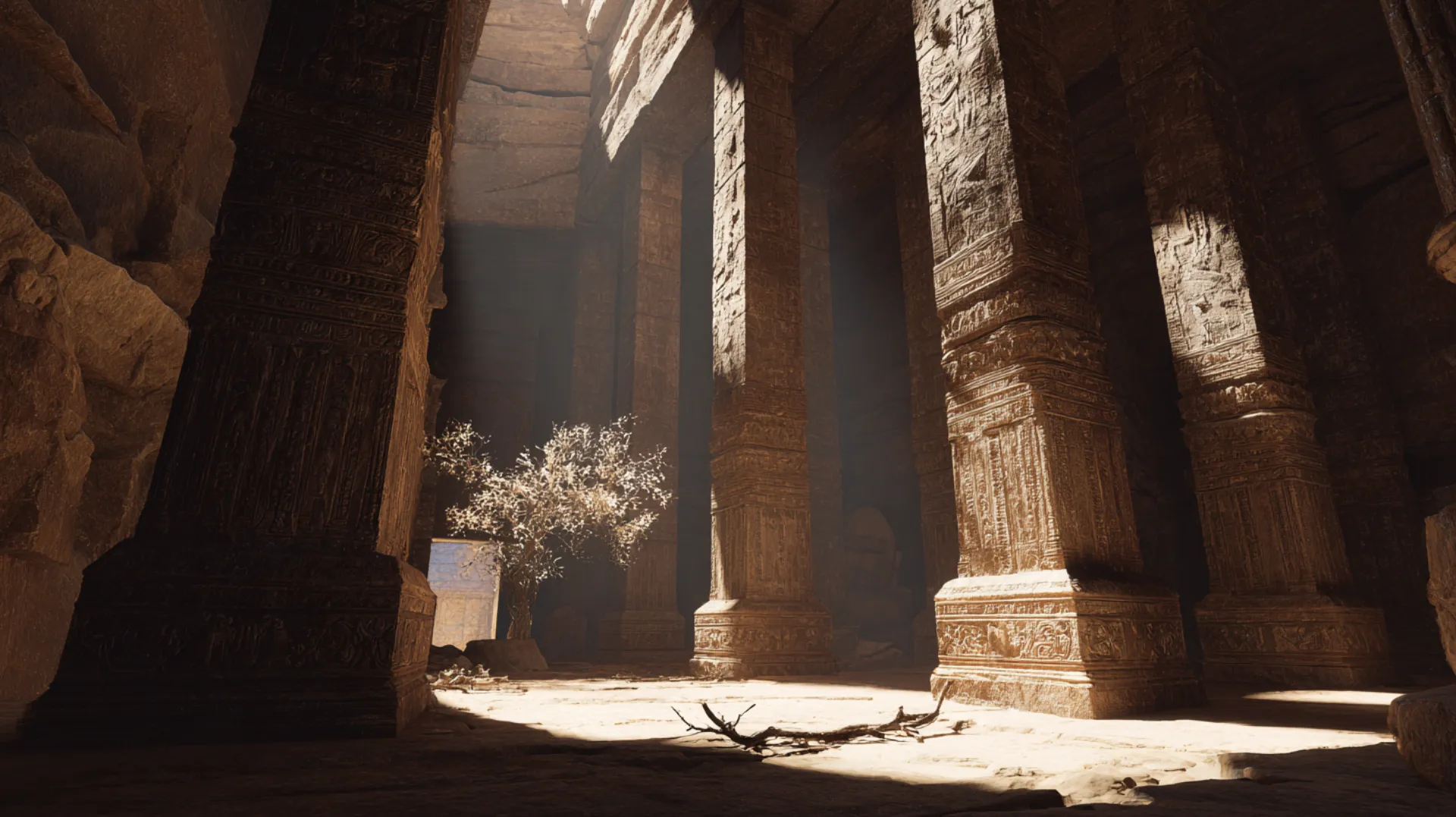
The Nile stretches like a dark ribbon through the highlands of Abyssinia, and somewhere along its banks, a young man crouches alone in the tall grass, watching two armies clash for the fate of eighty Muslim refugees who have staked everything on the justice of a Christian king.
pre-hijra · 613 – 616 CE
The Nile stretches like a dark ribbon through the highlands of Abyssinia, and somewhere along its banks, a young man named Zubayr ibn al-Awwam crouches alone in the tall grass, watching two armies clash for the fate of a kingdom—and with it, the fate of eighty Muslim refugees who have staked everything on the justice of a Christian king they have never met.
Thousands of miles to the north, in the narrow alleys of Mecca, the rest of the believers endure a different kind of war—one fought with fists and insults, boycotts and broken bones. Between these two worlds, separated by desert and sea and language, the early Muslim community is learning its first great lesson in survival: sometimes faith means staying and enduring, and sometimes it means leaving everything behind.
The Decision to Leave
The fifth year of the prophetic mission. Roughly seven years before the Hijrah to Medina. The persecution in Mecca has escalated beyond insults and social pressure into systematic physical violence. Bilal is tortured under boulders in the midday sun. Sumayyah has been murdered. The Prophet Muhammad (peace be upon him) himself has been assaulted at the Ka’bah, though divine intervention has thus far protected him from the worst.
For the believers without tribal protection—the enslaved, the foreign-born, the young converts whose families have disowned them—Mecca has become a cage. And so the Prophet offers them a door.
In the month of Rajab, he gathers his followers and speaks words that would have been almost incomprehensible to any Arab of that era: Leave your homeland. Cross the sea. Go to Abyssinia, where there is a Christian king who is just, and he will not allow you to be oppressed.
The weight of this instruction cannot be overstated. In seventh-century Arabia, to leave your tribe was to leave the only social safety net that existed. There were no banks to wire funds, no embassies to issue visas, no international law to guarantee safe passage. Your property stayed behind. Your name meant nothing in a foreign land. One of the recognized punishments in later Islamic law—at-taghreeb, exile from one’s homeland—was considered so severe precisely because displacement was a kind of social death.
And the Prophet was not sending them to a neighboring Arab city where at least the language and customs would be familiar. He was sending them across the Red Sea to Africa—to a land of different tongue, different culture, different faith. The only assurance he could offer was a single phrase about its ruler: malikun ‘adil—a just king.
Scholarly Note
The precise number of the first emigration is debated. Most sources, including Ibn Ishaq, record approximately 11 men and 4 women, though some counts go as high as 15 to 17 total. Uthman ibn Affan (may Allah be pleased with him) and his wife Ruqayyah, the Prophet’s own daughter, are unanimously recorded as the first couple to emigrate. Other notable emigrants included Abdurrahman ibn Awf, Zubayr ibn al-Awwam, Musab ibn Umayr, Abu Salama and his wife Umm Salama (may Allah be pleased with them all).
A Rumor Crosses the Desert
What happened next reveals how fragile hope can be when it travels by word of mouth.
In the month of Ramadan, the Prophet recited Surah An-Najm publicly near the Ka’bah. The surah is one of the Quran’s most powerful compositions—its verses build in rhythmic intensity, question after question, image after image, until the final command rings out:
“So prostrate to Allah and worship Him.” (An-Najm, 53:62)
The momentum of the recitation was overwhelming. The Muslims fell into prostration. And then, in a moment that stunned everyone present, the Quraysh—the very people who had been persecuting the believers—fell into prostration alongside them. The sheer rhetorical force of the Quran had, for one extraordinary instant, united Muslim and pagan in a single act of submission.
Scholarly Note
This incident is recorded in Sahih al-Bukhari. The narration notes that only one man refused to prostrate—either Al-Walid ibn al-Mughira or Umayyah ibn Khalaf, depending on the report—who instead scooped up a handful of sand and pressed it to his forehead, declaring it “sufficient.” The identity of the holdout varies between narrations, but the core event—the collective prostration—is well-established.
Now, rumors in the ancient world did not travel with nuance. By the time this story crossed the desert and the sea to reach the Muslim refugees in Abyssinia, the message had transformed entirely. The Quraysh had not merely prostrated in a moment of involuntary awe—they had accepted Islam. Mecca was united. The persecution was over.
The emigrants were electrified. Imagine receiving this news after months of exile in a foreign land, cut off from family and home, struggling with a new language and climate. Of course they wanted to believe it. Of course they packed their things and headed home.
But as they approached Mecca, reality reasserted itself with brutal clarity. The first caravan they encountered on the road delivered the truth: You have heard false. The people of Mecca are as they were. The new religion is being persecuted.
Some wanted to turn back immediately. But they were so close—their homeland was right there, just over the next ridge. Emotionally, psychologically, they could not bring themselves to retreat when they could practically smell the dust of home. And so, one by one, they entered Mecca. But entering was not the same as returning. When they had left, they had effectively renounced their tribal protections. Now each one needed a new sponsor, a new guarantor, someone willing to stake their honor on a Muslim’s safety.
The Courage of Uthman ibn Mad’un
Among those who returned was Uthman ibn Mad’un (may Allah be pleased with him), a man of distinguished moral character even before Islam. He reached out to Al-Walid ibn al-Mughira—the patriarch of Banu Makhzum, one of the most powerful men in Mecca, and father of the future military genius Khalid ibn al-Walid. Al-Walid and Uthman had a pre-existing friendship, and the old chieftain agreed to extend his protection. He marched with Uthman to the Ka’bah and publicly announced: I have given my protection to Uthman ibn Mad’un. Under the shield of Al-Walid’s name, not a hair on Uthman’s head was touched.
But safety, for a man of conscience, can become its own torment.
Ibn Ishaq narrates that as Uthman moved freely through Mecca’s streets, he watched his fellow Muslims being beaten, humiliated, and starved. He saw Ibn Mas’ud harassed. He saw the weak and unprotected suffer daily indignities. And he—because of a friendship forged in the days of ignorance—walked untouched.
The guilt consumed him. One day, he went to Al-Walid and said: Take your protection back.
Al-Walid was baffled. My nephew, what has happened? Has anyone harmed you? Have I not done my service?
Uthman’s answer was simple: I cannot bear to see my brothers and sisters suffer while I have this freedom.
Al-Walid came to the Ka’bah and publicly announced the withdrawal of protection. Uthman confirmed it, making clear that Al-Walid had fulfilled his obligations honorably—the decision was entirely his own.
What followed was almost immediate. Walking through the city, now stripped of all protection, Uthman passed a gathering where the great poet Labeed was performing for the Quraysh. Labeed was one of the composers of the Mu’allaqat, the legendary “Suspended Odes” of pre-Islamic Arabia—a literary celebrity of the highest order.
Labeed recited a line that would later be praised by the Prophet himself as the most truthful statement any poet had ever uttered: “Verily, everything other than Allah is useless.”
Uthman’s heart soared. “You have spoken the truth!” he called out.
Then Labeed recited the second half of the couplet: “And every blessing, without any doubt, will disappear.”
Uthman’s voice rang out again: “You have lied! The pleasures of Paradise will never end.”
The audience erupted. Labeed, the honored guest, the visiting dignitary, had been publicly contradicted—heckled, as he saw it, by a member of the host tribe. Someone in the crowd stood up and struck Uthman hard enough to blacken his eye.
When Al-Walid heard, he rushed to Uthman’s home and pleaded with him to accept protection again. Uthman’s response has echoed through fourteen centuries of Islamic memory: “My other eye is now jealous. It needs the same blessing this one has received.”
He refused to go back under anyone’s protection but Allah’s.
Abu Bakr's Masjid: The First Purpose-Built Prayer Space
Abu Bakr al-Siddiq (may Allah be pleased with him) had his own dramatic encounter with the protection system. When the first emigration was announced, Abu Bakr set out for Abyssinia but was intercepted on the road by Ibn al-Daghina, the chieftain of a neighboring tribe and a former trading partner. Ibn al-Daghina, recognizing Abu Bakr’s stature, offered to negotiate protection for him with the Quraysh.
The Quraysh agreed—with one condition: Abu Bakr could not pray publicly. His recitation of the Quran was too beautiful, too emotionally compelling. Ibn Ishaq records that women and children would gather around whenever he prayed, drawn by his melodious voice and the tears that flowed freely as he recited. His daughter Aisha later described him as rajulan bakkaa’an—a man who wept easily from the fear of Allah.
Abu Bakr’s solution was characteristically ingenious. He extended his house and built what is described as the first purpose-built prayer space (masjid) in Islamic history—not a grand structure, but a room attached to his home where he could pray aloud. Technically, he was praying in his own house, as the conditions stipulated. But sound carries in a small city of narrow alleyways, and soon his recitation was drawing crowds from blocks away.
The Quraysh demanded he stop praying even in his own home. When Ibn al-Daghina relayed this ultimatum, Abu Bakr’s response was immediate: “I throw back your protection to you. And I accept the protection of Allah.” From that moment until the Hijrah to Medina years later, Abu Bakr lived in Mecca without any human protection—which is why, when he later rushed to defend the Prophet from being choked at the Ka’bah, the crowd beat him so severely he was immobilized for over a week. No tribe would answer for him. No chieftain would intervene.
The Second Emigration
The returned emigrants quickly realized their mistake. Mecca had not changed. If anything, the persecution had intensified. And now they had a story to tell—not of defeat, but of what they had found across the sea.
In Abyssinia, they had been safe. They had food. They had security. The two blessings the Quran identifies as the greatest gifts after faith itself:
“Who has fed them against hunger and secured them from fear.” (Quraysh, 106:4)
Word of mouth—the same force that had brought them back on a false rumor—now worked in the opposite direction. The returning emigrants described life in Abyssinia to every Muslim who would listen. Yes, it was culturally alien. Yes, the language was incomprehensible. Yes, the climate was different. But no one was being tortured for praying.
The effect was dramatic. Where the first emigration had numbered roughly fifteen people, the second wave swelled to more than eighty Muslims—perhaps thirty to fifty percent of the entire Muslim population of Mecca. They were led this time by Ja’far ibn Abi Talib (may Allah be pleased with him), the Prophet’s cousin, a man chosen for his eloquence, his courage, and his unshakeable composure under pressure.
In a city that probably held no more than a thousand inhabitants, the departure of eighty people was not a quiet exodus. It was a public humiliation for the Quraysh—the custodians of the Ka’bah, the most prestigious tribe in Arabia, watching their own people flee to a foreign Christian kingdom. This was unprecedented in Arabian memory.
The Quraysh could not let it stand.
The Court of the Najashi
The Quraysh dispatched two of their shrewdest operators to Abyssinia: Amr ibn al-As—a man whose political cunning would later serve the Muslim state brilliantly after his conversion—and a companion whose identity is disputed between Abdullah ibn Abi Rabi’ah and Umar ibn al-Walid. They carried with them the most valuable commodity Mecca could offer: fine camel leather, a luxury unavailable in East Africa, along with incense and other precious goods.
Their strategy was textbook political maneuvering. Before approaching the Najashi himself, they visited every minister and vizier in his court, distributing expensive gifts and delivering a carefully crafted message: We have renegades in your midst. Foolish youth who have abandoned our religion without embracing yours. Support us when we petition the king tomorrow.
The next day, before the Najashi, they made their case with calculated precision, hitting every pressure point they could identify—religious difference, social disruption, political risk: “Some foolish youth from our nation have emigrated to your country. They have left our religion, and they have not embraced your religion. They have invented a new religion that neither we nor you recognize. The leaders of our community have sent us to retrieve them.”
The bribed ministers rose in support. Return them to their people. Let them deal with their own affairs.
But the Najashi—whose personal name was Ashumah, and whose grave remains known in Ethiopia to this day—refused.
“No, by Allah. I cannot hand them back after they have chosen my land over all others and sought my protection. The least I can do is hear their side.”
Scholarly Note
Umm Salama (may Allah be pleased with her) is the primary narrator of the events in Abyssinia, and her accounts are preserved in Sahih al-Bukhari and other collections. She provides the most detailed eyewitness testimony of the court proceedings, the Qurayshi delegation’s tactics, and the daily life of the Muslim refugees. Without her narrations, much of this pivotal chapter would be lost to history.
Ja’far’s Speech
The next morning, the Muslim refugees filed into the palace of the Najashi. They found him seated among his patriarchs—the Batariqa, the senior religious figures of the Abyssinian church—with Amr ibn al-As and his companion on one side, and the weight of an empire’s judgment hanging in the air.
Amr and his companion entered first and prostrated before the king, as was the custom of all who approached the throne. Then Ja’far ibn Abi Talib walked in.
He stood erect. He did not lower his head. He did not bow.
The ministers were outraged. How dare you enter without prostrating to the Najashi?
Ja’far’s voice was steady: “Our Prophet has told us that we can only prostrate to our Lord.”
It was a breathtaking gamble. Their entire future in Abyssinia depended on this audience, and the first thing Ja’far did was refuse the most basic court protocol. But there was a principle at stake that could not be compromised, not even for survival.
The Najashi, intrigued rather than offended, asked the question that would determine everything: “What is this religion of yours?”
What followed was one of the most celebrated speeches in Islamic history. Ja’far did not recite theology. He told a story—their story:
“Your Highness, we were a people steeped in ignorance. We worshipped idols. We ate carrion. We committed every manner of indecency. We broke the ties of kinship. We mistreated our neighbors. The strong among us devoured the weak.”
He paused, letting the Najashi absorb the picture of a society without moral compass—a picture that would have been especially vivid to a Christian ruler who valued civilization and order.
“We remained in this state until Allah sent us a messenger from among ourselves—a man whose lineage we knew, whose truthfulness we recognized, who had never spoken a single lie. He called us to worship one God alone, to abandon the worship of stones and statues. He commanded us to speak the truth, to fulfill our promises, to honor the ties of kinship, to be good to our neighbors. He forbade us from spilling blood, from devouring the property of orphans, from bearing false testimony.”
Every word was calibrated. Ja’far was not merely defending his community—he was presenting Islam in terms that a just Christian king could recognize as the continuation of his own prophetic tradition. Monotheism. Truthfulness. Justice. Compassion for the vulnerable.
“So we believed in him. And our people opposed us. They tortured us. They tried to force us back to idol worship. When life became unbearable, we emigrated to your land. We chose you above all other rulers. We put our trust in your justice.”
The Najashi was moved. He asked: “Do you have any of this revelation with you?”
Ja’far said yes. And then he made perhaps his most brilliant decision of the entire encounter. Of all the surahs he could have chosen, he recited the opening passages of Surah Maryam—the chapter named after the Virgin Mary, recounting the miraculous birth of John the Baptist and the annunciation to Mary of the birth of Jesus.
For ten or fifteen minutes, the voice of Ja’far ibn Abi Talib filled the halls of the Abyssinian palace with Arabic recitation that the patriarchs could not understand but could not resist. Ibn Ishaq records that even the priests, without comprehending a word, were moved to tears. When the passage was translated, the Najashi himself wept.
Then he spoke words that sealed the Muslims’ safety: “By God, this recitation and the message of Moses and Jesus have sprung forth from the same fountain.”
He turned to Amr ibn al-As: “Go. I will not hand these people over to you.”
The Second Hearing
But Amr ibn al-As was not finished. As he left the palace in humiliation, he whispered to his companion: “I have one more trick.”
His companion—the gentler of the two—urged him to stop. “These are our relatives, Amr. Leave it.” But Amr was relentless.
The next day, he returned to the Najashi with a theological grenade: “They say something blasphemous about Jesus Christ. Ask them what they believe about your God.”
This was the moment the Muslims feared most. The Najashi summoned them immediately. When the message arrived, Ja’far’s companions were terrified—more frightened, Umm Salama recalls, than they had been the day before. They knew exactly what Amr was doing. If they told the truth about their belief regarding Jesus—that he was not the son of God—they could lose everything.
“What will we say, Ya Ja’far?”
His answer never wavered: “We will say exactly what our Prophet told us to say.”
Before the Najashi, with the patriarchs watching and Amr ibn al-As waiting to pounce, Ja’far spoke: “We say that Jesus is the servant of Allah, His messenger, His spirit, and His word, cast unto the virgin, the pure, the chaste Maryam.”
Notice what Ja’far did. Every word was true. He affirmed Jesus as a prophet, a messenger, a miraculous creation. He honored Mary with every title of reverence. He did not lie. But he also did not volunteer the theological confrontation that Amr was hoping to provoke—he did not say “and the Trinity is false.” There was no need. The Najashi understood perfectly what was being said and what was not.
The Najashi picked up a small twig from the ground and held it before the court.
“By God, what you have said does not exceed what Jesus himself said by even this much.”
The patriarchs murmured in displeasure. But the Najashi had made his decision. He turned to Amr ibn al-As for the final time: “Go. Take all of your gifts back. I have no need for them.”
Every gift—including those already distributed to the ministers—was returned. The Muslims remained under the Najashi’s protection.
Life in Exile
The Muslim community in Abyssinia would remain there for more than a decade. Umm Salama’s testimony, preserved across the hadith collections, paints a picture of genuine security: “We were treated hospitably. He granted us security in our religion. We did not even hear one word of ridicule against us.”
But exile, even comfortable exile, carries its own weight. These were Arabs living in an African kingdom, separated from their Prophet, their families, and the unfolding drama of the Islamic movement. When a pretender to the throne challenged the Najashi and civil war threatened, the Muslims were paralyzed with fear—not for themselves, but for the loss of their protector. Zubayr ibn al-Awwam volunteered to scout the battle on the banks of the Nile, and when he returned with news of the Najashi’s victory, Umm Salama recalls that the community had never been happier.
The Najashi himself, according to al-Bayhaqi’s Dala’il al-Nubuwwah, had even prepared a secret escape plan for the Muslims—a ship stationed at a hidden location, with a captain instructed to take them wherever they wished if the king fell. He was thinking of their safety even as he faced his own death.
The Satanic Verses Controversy: An Academic Examination
The question of why the first emigrants returned to Mecca on a false rumor has generated one of the most sensitive scholarly debates in Islamic history. The authentic version, recorded in Sahih al-Bukhari, is straightforward: the Prophet recited Surah An-Najm, its power overwhelmed both Muslims and pagans, everyone prostrated, and the rumor that reached Abyssinia inflated this into a story of mass conversion.
However, later sources—particularly al-Tabari’s encyclopedic Tafsir, which the author himself described as an unfiltered collection rather than a critically authenticated work—contain two additional versions of the story. Version two, traced to the tabi’i Urwa ibn al-Zubayr (not a Companion, and therefore with a missing link in the chain), claims that after the Prophet recited verses 19-20 of Surah An-Najm mentioning the pagan idols al-Lat, al-Uzza, and Manat, Shaytan cried out two additional phrases praising the idols—phrases the pagans heard but the Muslims did not. Version three, found in even more obscure sources, claims the Prophet himself was temporarily deceived into reciting these phrases, thinking they were from Jibreel.
The term “Satanic Verses” itself is not Islamic in origin—it was coined by the Scottish Orientalist Sir William Muir (d. 1905). Islamic sources that discuss the incident call it Qissatul Gharaniq (“The Story of the Cranes”), referring to the alleged interpolated phrases comparing the idols to beautiful, high-flying birds whose intercession would be accepted.
The scholarly response has been multilayered:
Those who reject versions 2 and 3 entirely include Ibn Kathir, al-Qadi Iyad, Fakhruddin al-Razi, and in modern times, Shaykh al-Albani, who wrote an entire monograph examining every chain of transmission and demonstrating their weakness. Ibn Khuzaymah (d. 311 AH), one of only four scholars to compile a Sahih collection, declared the story “a fabrication by the enemies of Islam.” A 1966 international scholarly conference in Cairo reached the same conclusion. Modern seerah works, including Sheikh Safi-ur-Rahman al-Mubarakpuri’s Ar-Raheeq al-Makhtum, either omit the story or explicitly label it fabricated.
Ibn Hajar al-Asqalani, the greatest commentator on Sahih al-Bukhari, accepted version two (in which Shaytan speaks independently, without the Prophet’s knowledge) based on the hadith principle that multiple weak chains, when corroborating the same incident, can collectively reach a level of acceptability. Shaykh al-Albani specifically responded to this methodology, arguing that the particular weaknesses in these chains are of a type that cannot be strengthened through combination.
Ibn Taymiyyah, controversially, accepted version three, arguing from Surah al-Hajj (22:52): “Never did We send a messenger or a prophet before you except that when he recited, Shaytan threw something into his recitation. But Allah abolishes what Shaytan throws in, then Allah makes His verses precise.” Ibn Taymiyyah’s position rested on a different understanding of prophetic infallibility (ismah)—he held that prophets could make minor errors but could never persist in them, and that Allah’s immediate correction demonstrated, rather than undermined, the integrity of revelation.
The theological stakes are significant: versions 2 and 3, if accepted, raise questions about the integrity of the revelatory process itself. The majority position, and the conclusion of modern scholarship, is that the Bukhari version alone is authentic and sufficient—the Quraysh prostrated because of the overwhelming power of the Quran, the rumor grew in transmission, and no Shaytan was involved.
The Bridge Between Worlds
The Najashi would eventually exchange letters with the Prophet after the Hijrah to Medina. According to al-Bayhaqi, the king wrote back: “I am a Muslim. I believe in you and in all that you say. If you command me, ya Rasulullah, I will come to Medina and serve you.”
When the Najashi died years later, the Prophet came out one day in Medina and announced to his Companions that Jibreel had informed him a righteous brother had died in a distant land. He led them in the only salat al-janazah ‘ala al-gha’ib—funeral prayer in absentia—ever performed in his lifetime. It was the final honor for a king who had staked his throne on justice.
Back in Mecca, the departure of more than eighty Muslims left the remaining community diminished but not defeated. Perhaps forty men remained in the city, enduring the persecution that their brothers and sisters had fled. The Prophet himself stayed, anchored to the land where the revelation continued to descend.
But Allah was preparing a different kind of reinforcement. Not an army from abroad, but two conversions from within—two men whose acceptance of Islam would shift the balance of power in Mecca more dramatically than any emigration could. One of them was a hunter returning from the wilderness, his blood boiling with tribal rage. The other was a man the Muslims feared more than almost anyone alive. Together, Hamza ibn Abd al-Muttalib and Umar ibn al-Khattab were about to change everything.
Quranic References
Continue Your Journey

Cite this Narrative
APA
SeerahQuest. (2026). Across the Sea to Justice. *SeerahQuest: The Eternal Narrative*. https://seerahquest.com/chapters/first-migration-to-abyssinia-and-return Adapted from Yasir Qadhi's Seerah Series, Episode 16, Episode 17.
MLA
"Across the Sea to Justice." *SeerahQuest: The Eternal Narrative*, 2026, https://seerahquest.com/chapters/first-migration-to-abyssinia-and-return. Adapted from Yasir Qadhi's Seerah Series, Episode 16, Episode 17.
Chicago
"Across the Sea to Justice." *SeerahQuest: The Eternal Narrative*. Accessed April 3, 2026. https://seerahquest.com/chapters/first-migration-to-abyssinia-and-return. Adapted from Yasir Qadhi's Seerah Series, Episode 16, Episode 17.
Install SeerahQuest — read chapters offline, anytime.