
The Farewell at Arafat
The sun has not yet cleared the horizon over Arafat, but already the earth trembles with the passage of a hundred thousand feet—and none of them know they are walking toward a farewell.
8-10 AH · 630 – 632 CE
The sun has not yet cleared the horizon over the plain of Arafat, but already the earth trembles with the passage of a hundred thousand feet. In every direction—ahead, behind, to the left, to the right—there is nothing but humanity: men and women on camels and on foot, a river of white ihram garments flowing south from Mecca toward the sacred plain. An old companion named Jabir ibn Abdullah will remember this sight decades later, blind and aged, and his voice will still catch with wonder: the Quran was still being revealed at that time, he will say, as though the memory of living in the presence of living revelation is almost too luminous to hold.
It is the tenth year of the Hijrah. The Prophet Muhammad (peace be upon him) has announced, for the first and only time, that he will lead the pilgrimage himself. And from every corner of the Arabian Peninsula—from Yemen and Najd, from the coastal towns of the Hijaz and the oasis settlements of the interior—tens of thousands have answered the call. They do not yet know they are walking toward a farewell.
The Journey South
Jabir ibn Abdullah (may Allah be pleased with him) would later recount the entire pilgrimage in a single, sprawling narration preserved in Sahih Muslim—a hadith so comprehensive that scholars call it the “mother of all hajj narrations,” running several pages in length and forming the backbone of Islamic pilgrimage jurisprudence to this day.
The Prophet departed Madinah on the 25th of Dhul Qa’dah, praying Dhuhr in the mosque before setting out. At Dhul Hulaifah, just outside the city, the caravan paused. Here, Asma bint Umais—wife of Abu Bakr al-Siddiq (may Allah be pleased with him)—gave birth to Muhammad ibn Abi Bakr. She sent word asking what she should do. The answer came back with characteristic practicality: bathe, bandage yourself, and enter the state of ihram. A woman in postpartum bleeding could still consecrate herself for the pilgrimage. Life and worship were not separate domains.
The Prophet mounted his camel, al-Qaswa, and the talbiyah rose from a hundred thousand throats:
Labbayk Allahumma labbayk, labbayka la sharika laka labbayk. Inna al-hamda wal-ni’mata laka wal-mulk.
“Here I am, O Allah, here I am. Here I am, You have no partner, here I am. Truly all praise, all blessing, and all sovereignty belong to You.”
Some companions added their own variations of praise, and the Prophet said nothing to correct them. The talbiyah echoed across the desert for ten days—the standard travel time for a large caravan moving at moderate pace between Madinah and Mecca. They arrived on the 4th of Dhul Hijjah.
True to his practice, the Prophet did not enter Mecca at night. He camped outside the city on Saturday evening, rested, rose for Fajr, performed a full bath while still in ihram—demonstrating that ghusl does not violate the pilgrim’s consecration—and entered Mecca on Sunday morning.
Scholarly Note
The exact number of pilgrims is unknown. Early scholars offer the round figure of 100,000, but as Dr. Yasir Qadhi notes, this is “a complete guesstimation.” What is certain is that this was the largest gathering of Companions in the Prophet’s lifetime. Many attendees became Companions (Sahabah) simply by seeing or hearing the Prophet during this Hajj, and their names were never recorded. Anonymous narrators appear in hadith collections reporting what they heard from the Prophet’s sermons, and their testimony is accepted on the principle that any eyewitness to the Prophet is considered a reliable narrator.
A New Way to Worship
Inside Mecca, the Prophet performed tawaf—seven circuits of the Ka’bah, the first three at a brisk pace, the last four walking. He prayed two rak’ahs behind the Station of Ibrahim, reciting Surah al-Kafirun and Surah al-Ikhlas. He kissed the Black Stone, then made his way to Safa.
Standing atop the hill until he could see the Ka’bah, he turned to face it and declared words that carried the weight of twenty-three years of struggle: Allah had fulfilled His promise, spoken the truth, aided His servant, and destroyed the opposing armies by Himself alone. What a thing to say in the city that had once expelled him—the city he had reclaimed without a battle, the city whose idols he had shattered with his own hands just two years before.
Then came the announcement that stunned the pilgrims. The Prophet declared that anyone who had not brought sacrificial animals should exit the state of ihram after completing the lesser pilgrimage rites and remain in ordinary clothes until the 8th of Dhul Hijjah, when they would re-enter ihram for the Hajj proper. This was tamattu’—the separation of Umrah and Hajj into two distinct acts within a single journey—and it was something pre-Islamic Arabia had never permitted.
The companions were incredulous. Some asked outright: “Are we to become fully halal again? Do you expect us to be intimate with our families?” The Prophet confirmed: everything was permissible between the two states of consecration.
Suraqah ibn Malik—the very bounty hunter who had once chased the Prophet across the desert during the Hijrah, now a faithful Muslim who had traveled to Mecca simply to be near the Prophet one more time—stood and asked the question on everyone’s mind: “Is this ruling only for this year, or forever?” The Prophet interlaced his fingers and said that Umrah and Hajj had been joined together until the Day of Judgment.
The Three Types of Hajj
The Farewell Pilgrimage crystallized what would become the three recognized modes of performing Hajj in Islamic jurisprudence:
Tamattu’ (enjoyment): The pilgrim performs Umrah, exits ihram, lives normally in Mecca, then re-enters ihram on the 8th of Dhul Hijjah for Hajj. This is what the Prophet encouraged the majority of companions to do.
Qiran (conjunction): The pilgrim combines Umrah and Hajj under a single, unbroken ihram. This is what the Prophet himself performed, because he had brought sacrificial animals from Madinah and could not exit ihram until they were distributed. Ali ibn Abi Talib (may Allah be pleased with him), arriving from Yemen with one hundred camels, also performed Qiran—he had declared his intention to follow “the niyyah of the Prophet,” not knowing the specific details until he arrived.
Ifrad (isolation): The pilgrim performs only Hajj, without Umrah. Some later-arriving companions chose this mode.
All three are considered valid by the major schools of jurisprudence, though they differ on which is preferable. The Prophet’s personal preference for tamattu’—expressed in his wish that he had chosen it himself—carries significant weight in these discussions. As he said: “If I had known before what I know now, I would not have brought my sacrificial animals, and I would have only performed an Umrah.”
The Encounter at Fatimah’s Tent
When Ali arrived from Yemen with his entourage and the hundred camels, he went straight to the tent of his wife, Fatimah bint Muhammad (may Allah be pleased with her). He had been away for months, serving as judge and arbitrator among the Yemeni tribes. What he found bewildered him: Fatimah was wearing colorful clothing, kohl lined her eyes, and she was perfumed. She was, unmistakably, out of ihram.
Ali’s reaction was sharp—how could she dress this way during Hajj? Fatimah’s answer was simple: “My father told me to do so.”
Ali marched to the Prophet, confused and perhaps a little indignant. The Prophet confirmed it calmly. Fatimah had spoken the truth. He had commanded them to exit ihram. Ali, too, could do the same—unless his intention bound him otherwise. When Ali explained that he had declared his niyyah to match whatever the Prophet was doing, the Prophet told him he would remain in ihram, performing Qiran like the Prophet himself.
Jabir, narrating this decades later to Muhammad al-Baqir—Fatimah’s own great-great-grandson—clearly relished the family detail. He was giving the descendant of the Prophet a glimpse of his ancestors as living, breathing people: a husband confused by his wife’s clothes, a daughter calmly invoking her father’s authority, a father-in-law settling the matter with a word.
Breaking the Quraysh’s Elitism
On Thursday morning, the 8th of Dhul Hijjah, the Prophet prayed Fajr at the Ka’bah and led the procession toward Mina. He spent the night there—Dhuhr, Asr, Maghrib, Isha, and Fajr—then waited for the sun to rise slightly on the morning of the 9th before commanding that his tent be pitched at Namira, a strip of land just outside the boundary of Arafat.
The newly converted Quraysh assumed he would stop at al-Mash’ar al-Haram in Muzdalifah. For generations, the Quraysh had refused to stand at Arafat with the common pilgrims. They had invented a theological justification for their arrogance: as custodians of the Sacred Precinct, they were too holy to leave the Haram boundaries. The rest of Arabia could go to Arafat; the Quraysh would remain at Muzdalifah’s edge, lords surveying their subjects from a distance.
The Prophet rode past al-Mash’ar al-Haram without stopping. He continued until he reached Namira, camped a stone’s throw from the boundary of Arafat, and waited—with almost surgical precision—until the exact moment the sun crossed its zenith, marking the beginning of Dhuhr. Then he entered the plain.
In a single, wordless act, he demolished centuries of Qurayshi elitism. The Prophet of God stood where every pilgrim stood. There was no elite section, no VIP enclosure, no tribal hierarchy on the plain of Arafat.
And then, as if to ensure no one would create a new hierarchy around his specific location, he said:
“I have happened to stand here, but all of Arafat is a place of standing.”
He would repeat this principle at Mina—“all of Mina is a camping ground”—and at Muzdalifah—“all of Muzdalifah is a place of rest.” The geography of worship was democratized. No spot was holier than another within these sacred boundaries.
The Sermon at Arafat
After leading Dhuhr and Asr combined—two rak’ahs each, with nothing in between—the Prophet mounted al-Qaswa and made his way to the rocky outcrop known today as Jabal al-Rahmah. There, from after the noon prayer until sunset, he stood with hands raised in supplication. Hours passed. The sun blazed overhead and then began its long descent. Anyone who has stood at Arafat in the summer heat knows that twenty or thirty minutes of focused prayer can feel like an endurance test. The Prophet stood for the entire afternoon.
It was on this day—a Friday, the 9th of Dhul Hijjah—that revelation descended one final time upon the plain:
“This day I have perfected for you your religion and completed My favor upon you and have approved for you Islam as your religion.” — Al-Ma’idah (5:3)
Scholarly Note
This verse, while among the last to be revealed, is not considered the absolute final verse of the Quran. The Prophet lived approximately three more months after the Farewell Hajj, and other verses—possibly including Surah al-Nasr and portions of Surah al-Baqarah—were revealed during that period. A Jewish man later remarked to Umar ibn al-Khattab (may Allah be pleased with him) that had such a verse been revealed to the Jews, they would have made the day of its revelation a festival. Umar replied that he knew exactly when and where it was revealed: on the day of Arafat, on a Friday—already a double celebration for the Muslims. This exchange is recorded in Sahih al-Bukhari.
Then the Prophet addressed the multitude. He told al-Abbas and Ali to quiet the crowd and to repeat his words. In a narration preserved in Sunan Abu Dawud, one companion reported that the Prophet’s voice could be heard even from the farthest tents—a phenomenon understood as a miraculous amplification, given the vast size of the gathering.
The sermon opened with the weight of farewell:
“O people, listen to me, for I know not whether I shall meet you again after this year.”
He knew. The companions, calling this the Hajjat al-Wada’—the Farewell Pilgrimage—did not yet fully grasp the implication. As Ibn Umar would later reflect: “We did not understand what farewell truly meant.” They used the word without feeling its finality.
What followed was nothing less than a constitution for a new civilization. Point by point, the Prophet dismantled the architecture of pre-Islamic Arabian society and laid the foundations for something unprecedented:
The sanctity of life and property: Your blood and your wealth are as sacred as this day, in this month, in this land. The law of the jungle—where the strong plundered the weak and survival was the only morality—was abolished in a single sentence.
The abolition of blood feuds: Every tribal vendetta, every generational cycle of revenge killing, was declared finished. And the Prophet began with his own family’s claim: the blood money owed for the killing of a young relative of Rabi’ah ibn al-Harith, from the clan of Abd al-Muttalib, caught as an innocent boy in a war between Banu Sa’d and Hudhayl. The Quraysh had nursed this grievance for years. The Prophet renounced it.
The abolition of usury: Every outstanding interest payment from the pre-Islamic period was cancelled, starting with the considerable sums owed to his own uncle, al-Abbas ibn Abd al-Muttalib, who had been one of Mecca’s most prominent moneylenders. The debts remained—borrowers still owed what they had borrowed—but not a penny more.
“The first usury I abolish is the usury of my uncle al-Abbas. You pay him back what you received, not a penny more.”
The pattern was unmistakable: in every case, the Prophet applied the new law to his own family first. He was not asking others to bear a burden he would not carry himself.
The rights of women: In a society where women were property, where female infanticide had been common within living memory, the Prophet devoted an entire section of his most important sermon to women’s rights. He commanded the men to fear Allah in their treatment of women, reminded them that the marriage contract was sealed in Allah’s name and under His protection, and obligated husbands to provide for their wives’ sustenance according to their means.
The equality of all human beings:
“All of you are from Adam, and Adam is from dust. There is no superiority of an Arab over a non-Arab, nor of a non-Arab over an Arab.”
This declaration, preserved in Musnad Ahmad and other collections, was without precedent in human history. No philosopher, no king, no tribal elder had ever proclaimed the fundamental equality of all races and peoples. The man with the most noble lineage in all of Arabia—a direct descendant of Ibrahim through Isma’il, of the house of Hashim, of the tribe of Quraysh—was the one declaring that lineage meant nothing before God.
The Book of Allah: “I have left amongst you something that, as long as you hold on to it, you will never go astray: the Book of Allah.”
Then he asked them—and the question carried the gravity of a man preparing to stand before his Lord:
“You shall soon be asked about me. What will you say?”
The multitude answered as one: “We testify that you have conveyed the message, fulfilled the trust, and counseled us sincerely.”
The Prophet raised his finger toward the sky three times:
“Allahumma fashhad. Allahumma fashhad. Allahumma fashhad.” — “O Allah, bear witness. O Allah, bear witness. O Allah, bear witness.”
The Night March and the Day of Sacrifice
When the sun finally set and the last yellow light drained from the sky, the Prophet placed Usama ibn Zayd behind him on al-Qaswa and pulled the camel’s nose-string so tightly it nearly touched the saddle. He moved slowly, deliberately, gesturing with his hands for the vast crowd to do the same: slow down, slow down, there is no need to rush. Even though no one would have blocked the Prophet’s path, he wanted to set the example for every generation of pilgrims to come.
At Muzdalifah, he led Maghrib and Isha together—one adhan, two iqamahs—and then rested until Fajr. After the dawn prayer, he stood in supplication until the sky brightened, then departed for Mina before sunrise.
At the Great Jamrah, he threw seven pebbles from the bottom of the valley, pronouncing Allahu Akbar with each throw. Then he went to the place of sacrifice.
With his own hand, the Prophet slaughtered sixty-three camels—one for each year of his life. He gave the remaining thirty-seven to Ali to complete the hundred. Another narration, outside of Jabir’s account, records something extraordinary: as the Prophet approached the herd with the knife, the camels pressed forward, each one racing to be the first slaughtered at his hands. This was not the behavior of animals facing a blade. It was, the companions understood, a sign.
He ordered a piece of meat taken from each of the hundred animals, cooked together in a single pot. He ate from the meat and drank of its broth, then distributed the rest to the poor—establishing the practice of sacrificial distribution that Muslims follow to this day.
Scholarly Note
The hadith of Jabir describing the entire Farewell Hajj is found in Sahih Muslim, narrated through the chain of Ja’far ibn Muhammad (known as Ja’far al-Sadiq) from his father Muhammad ibn Ali (known as Muhammad al-Baqir), who heard it directly from Jabir ibn Abdullah. This chain passes through three generations of the Ahl al-Bayt—the Prophet’s own family—and is treasured by both Sunni and Shia scholarship. From the Sunni perspective, these figures are recognized as among the most righteous people of their respective eras, though without the infallibility attributed to them in Twelver Shia theology.
The Second Sermon at Mina
On the 10th of Dhul Hijjah, the Day of Sacrifice, the Prophet gave another sermon. He began with a correction to the calendar itself. For years, the Quraysh had manipulated the sacred months, swapping them at will to accommodate their wars. If they wanted to fight during a sacred month, they simply declared it to be a different month. After years of such tampering, the calendar had become hopelessly jumbled.
But this year, by Allah’s decree, the months had realigned to their original positions—exactly as they had been on the day Allah created the heavens and the earth. The Prophet commanded the Muslims to keep the calendar fixed: twelve months, four of them sacred, three consecutive—Dhul Qa’dah, Dhul Hijjah, and Muharram—and the solitary Rajab between Jumada and Sha’ban.
Then he employed a rhetorical technique of devastating simplicity. He asked the crowd: “What month is this?” The question was so obvious that the companions were too embarrassed to answer, wondering if perhaps the Prophet was about to rename it. He waited, then said: “Is this not Dhul Hijjah?” They said yes. “What day is this?” Silence again. “Is this not the Day of Sacrifice?” Yes. “What land is this?” More silence. “Is this not the sacred land?”
Having established what every Arab already knew to be inviolable—the sanctity of this month, this day, this place—he delivered the conclusion:
“Your lives, your property, and your honor are as sacred to one another as this month, this day, and this land.”
He warned them not to return to the ways of disbelief by killing one another after his departure. He declared that Satan had given up hope of being worshipped on the Arabian Peninsula, but remained hopeful of inciting Muslims against each other through what they would dismiss as minor sins and petty disputes.
And he gave them a final instruction that echoes across fourteen centuries:
“Let the one who is present inform the one who is absent, for perhaps the one who hears will understand better than the one who heard it firsthand.”
The Return
On the night of the 12th or 13th, the Prophet performed the farewell tawaf and began the journey back to Madinah. Aisha bint Abi Bakr (may Allah be pleased with her)—who had wept upon arriving in Mecca because her menses had begun, preventing her from performing tawaf—had completed her Hajj rites once her cycle ended. But as they prepared to leave, she made a request that reveals the humanity woven through even the most sacred of journeys: all the other wives had performed both Umrah and Hajj, while she had only managed Hajj. It wasn’t fair.
The Prophet told her it was sufficient. Aisha insisted. And so, as the Prophet himself noted with gentle acquiescence, her brother Abd al-Rahman ibn Abi Bakr took her to Tan’im—the nearest point outside Mecca’s sacred boundary—where she entered ihram and completed her Umrah. Abd al-Rahman himself did not perform a second Umrah, nor did any other companion repeat the rite. But Aisha’s insistence established the permissibility of the practice for all time.
They rejoined the caravan and made their way north, back toward Madinah. The Prophet had told them everything they needed to know. He had shown them how to worship, how to treat one another, how to build a just society. He had asked them to bear witness, and they had testified. He had raised his hands to the sky and called upon Allah to confirm the testimony.
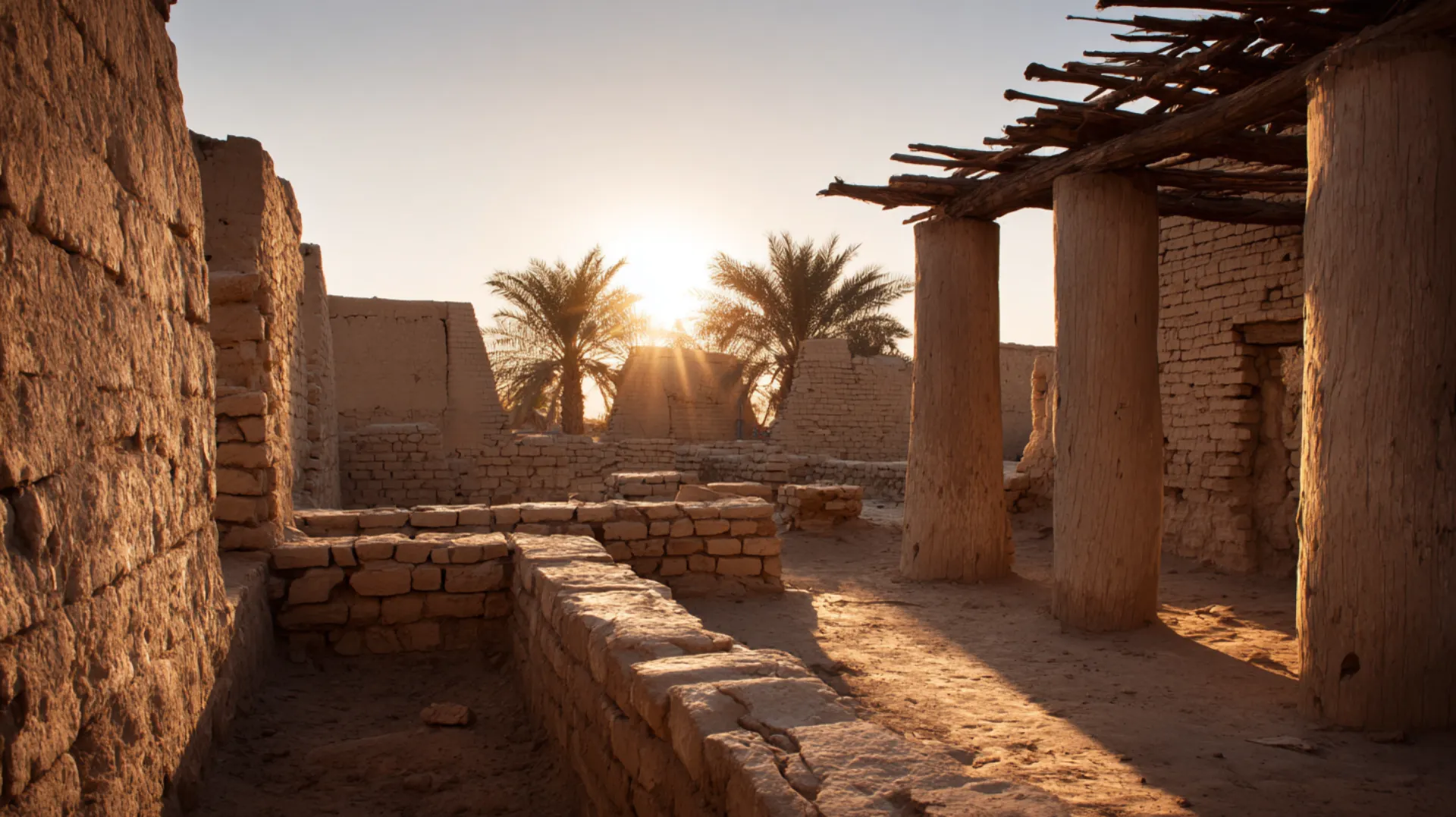
Now the road stretched ahead—back to Madinah, back to the mosque with its palm-trunk pillars and earthen floor, back to the small chamber where Aisha waited. Three months remained. The Quran was nearly complete. The message had been delivered. And somewhere in the silence between the talbiyah’s final echo and the first cough of a coming fever, the farewell the companions had named but not yet understood was already unfolding.
Quranic References
Continue Your Journey

Cite this Narrative
APA
SeerahQuest. (2026). The Farewell at Arafat. *SeerahQuest: The Eternal Narrative*. https://seerahquest.com/chapters/hajj-of-abu-bakr-al-siddiq-9th-year-of-hijra-part-2 Adapted from Yasir Qadhi's Seerah Series, Episode 100.
MLA
"The Farewell at Arafat." *SeerahQuest: The Eternal Narrative*, 2026, https://seerahquest.com/chapters/hajj-of-abu-bakr-al-siddiq-9th-year-of-hijra-part-2. Adapted from Yasir Qadhi's Seerah Series, Episode 100.
Chicago
"The Farewell at Arafat." *SeerahQuest: The Eternal Narrative*. Accessed April 3, 2026. https://seerahquest.com/chapters/hajj-of-abu-bakr-al-siddiq-9th-year-of-hijra-part-2. Adapted from Yasir Qadhi's Seerah Series, Episode 100.
Install SeerahQuest — read chapters offline, anytime.