
The Treaty That Conquered Without a Sword
Abu Jandal broke free from his chains and threw himself into the Muslim camp—only to learn that the treaty his own father was negotiating would send him back.
6 AH · 628 CE
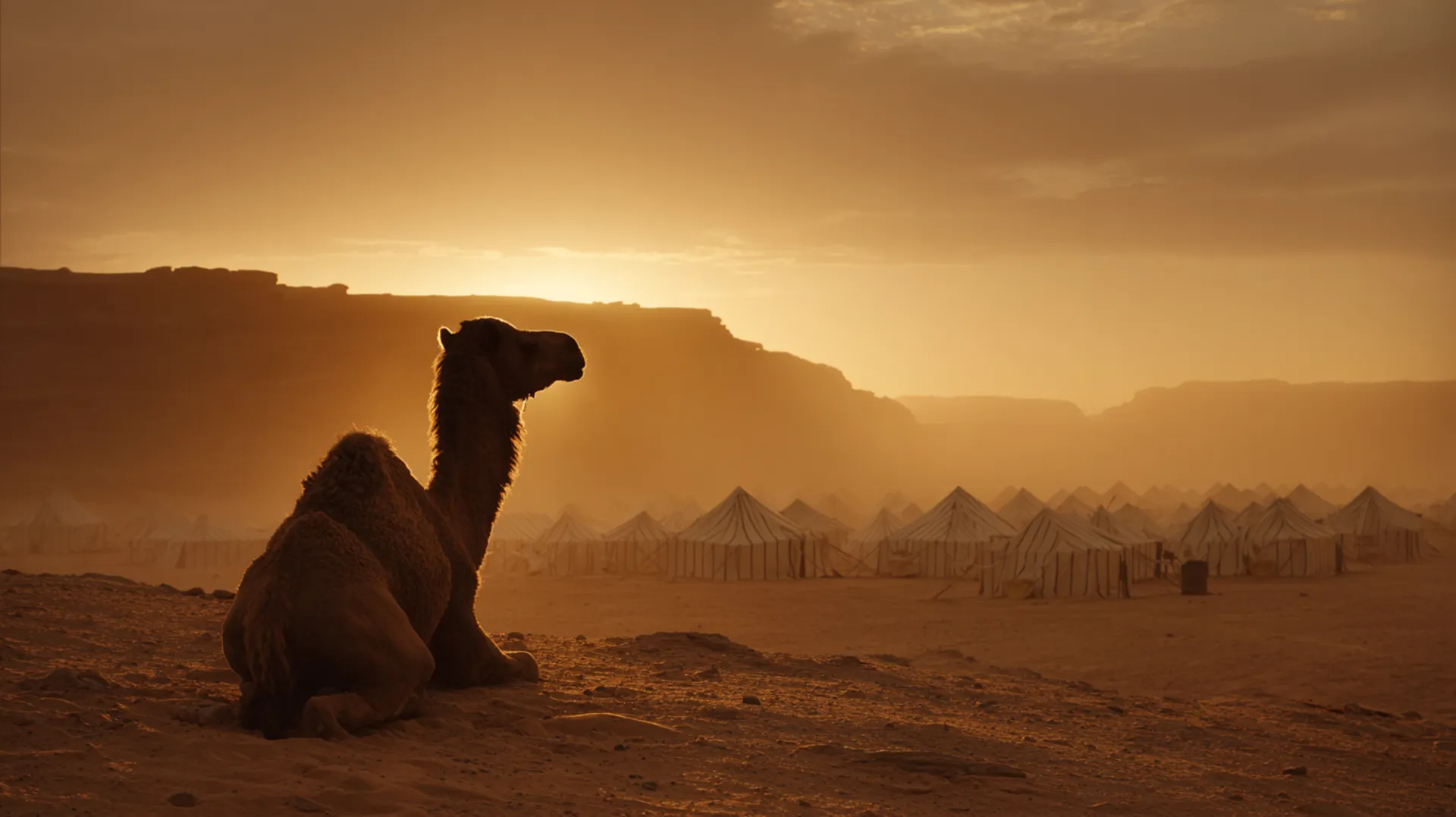
The chains still bore his weight, but not his spirit. For three years—perhaps four—Abu Jandal had mapped every shadow in his Meccan dungeon, memorized the rhythm of his guards, and nursed a single, burning hope: that one day the road to the Muslims would open. When word filtered through the walls that the Prophet Muhammad (peace be upon him) and fourteen hundred believers were camped just outside the city at Hudaybiyyah, that hope ignited into action. He broke free, dragging his fetters across the stony ground, and threw himself into the Muslim camp—only to discover that the very treaty being negotiated by his own father would send him back.
What followed in those extraordinary days at Hudaybiyyah was not merely a diplomatic exchange between two parties. It was a crucible in which faith, politics, human emotion, and divine revelation collided—producing a document that would reshape the entire Arabian Peninsula and, centuries later, still provoke fierce debate about the nature of victory itself.
The Terms That Stung
The treaty’s clauses, dictated primarily by Suhail ibn Amr (may Allah be pleased with him, for he later embraced Islam), read like a catalogue of concessions. A ten-year ceasefire—“no armor and no swords”—would hold between the Muslims and the Quraysh. Both sides could freely negotiate alliances with any tribe in Arabia. Any tribe entering alliance with the Muslims would be bound by the treaty’s terms; likewise for those alligning with the Quraysh.
Then came the provisions that cut deepest. The Umrah the Muslims had traveled weeks to perform? Not this year. “Let not the Arabs say you had the upper hand over us,” Suhail insisted. The pilgrimage would wait until the following year, and even then, the Muslims would be granted only three days in Mecca before the city was emptied for their visit.
Most painfully: any Muslim fleeing Mecca for Medina would be returned to the Quraysh. But any Muslim who abandoned Islam and returned to Mecca would not be sent back. A one-way street of apparent humiliation, transparent in its unfairness to any neutral observer.
Ali ibn Abi Talib (may Allah be pleased with him) served as scribe, writing the contract with his own hand. All four of the future Rightly Guided Caliphs—Abu Bakr, Umar, Uthman, and Ali—stood as witnesses on the Muslim side. On the Quraysh side, Suhail and Mikraz and their companions affixed their names.
Scholarly Note
One version in Sahih al-Bukhari states that the Prophet himself took the pen and “wrote” when Ali hesitated to erase the phrase “Messenger of Allah” at Suhail’s demand. Whether this indicates actual literacy or a miraculous act is the subject of significant scholarly debate. The Maliki scholar Abul Walid al-Baji controversially argued that the Prophet could read and write—a position that sparked fierce opposition in Andalusia, with some scholars declaring it tantamount to disbelief since the Quran calls him “al-Nabi al-Ummi” (the unlettered Prophet) in Al-A’raf (7:157). The majority position, held by Ibn Kathir and others, maintains that the Prophet could not read or write, and that the Bukhari narration uses “wrote” in a figurative or miraculous sense. This controversy is explored further in the next chapter.
The Fury of the Faithful
Beneath the surface of these negotiations, a storm was building among the Companions. Umar ibn al-Khattab (may Allah be pleased with him) was the one who gave voice to what many felt but could not articulate. He strode to the Prophet and launched a series of rhetorical questions—the kind asked not to learn, but to protest.
“Are you not the Messenger of Allah?”
“Yes.”
“Are we not upon the truth, and our enemies upon falsehood?”
“Yes.”
“Then how can we accept humiliation in our religion?”
The Prophet’s response was a fortress of calm: “I am the Messenger of Allah, and I will not disobey Him, and He will help me.” How? He did not say. Where this road led? He could not yet see. But Allah had commanded these terms, and that was enough.
Umar, unsatisfied, tried a different angle. “Didn’t you tell us we would perform tawaf around the House of Allah?” The Prophet replied with devastating precision: “Indeed I did. But did I say you would do it this year?” Umar admitted he had not. “Then you will do it,” the Prophet said simply. “But I did not tell you which year.”
When Umar, still burning, took his frustration to Abu Bakr al-Siddiq (may Allah be pleased with him), he received not sympathy but a rebuke. “Ya Rajul!”—a blunt, almost harsh address—“He is the Messenger of Allah. He will not disobey his Lord. So hold on to the stirrup of his saddle. Otherwise there is no hope for you.” Abu Bakr, without having heard the Prophet’s response, had arrived at the identical conclusion independently. His trust was not blind; it was total. He understood that there must be something beyond his own comprehension at work, and that understanding was itself a form of sight.
The Rank of Abu Bakr: Trust as Superior Vision
The Hudaybiyyah episode is one of the clearest demonstrations in the Seerah of why Islamic scholarship has consistently ranked Abu Bakr above Umar in spiritual station. Both men were hurt. Both were angry. But Abu Bakr’s response reveals a qualitative difference in faith: where Umar needed the Prophet’s reassurance and then Quranic confirmation to accept the treaty, Abu Bakr needed neither. He had already processed the situation and concluded that if the Prophet accepted these terms, there must be wisdom he could not yet see.
This pattern would repeat at the most critical moment in Islamic history—the death of the Prophet himself. When Umar, overwhelmed by grief, threatened anyone who claimed the Prophet had died, it was Abu Bakr who steadied the entire community by reciting the verse from Al Imran (3:144): “Muhammad is not but a messenger. Other messengers have passed on before him.” Umar later said it was as though Abu Bakr “cut my legs from underneath me.” No one else in the community had the combination of spiritual clarity and personal authority to check Umar ibn al-Khattab. This was not softness masquerading as strength; it was the deepest strength expressing itself through composure.
Years later, Umar would confess during his own caliphate: “On the day of Hudaybiyyah, the Prophet put a condition on us that, if any other leader had put it on me, I would never have accepted it.” He also said: “I continued to perform good deeds after that, hoping Allah would forgive me for what I had done”—freeing slaves, fasting extra days, praying through nights. His repentance was not a whispered formula but a restructuring of his life. As the Quran itself links true repentance to action: “Except those who repent, believe, and do righteous deeds” (Al-Furqan, 25:70).
Umar was not alone in his anguish. The Companion Sahl ibn Hunayf (may Allah be pleased with him), years later at the Battle of Siffin—when Muslims stood poised to fight other Muslims—opened his heart to the soldiers around him: “O people, accuse your own opinions before you accuse the Quran and Sunnah. I remember myself on the Day of Abu Jandal”—notice, he did not even call it the Day of Hudaybiyyah, so searing was the memory of that tortured young man being dragged away—“and if I could have rejected the command of the Prophet, I would have done so.” The emotional trauma of watching Abu Jandal returned to his captors had become, for the Companions, a permanent lesson in submission to divine wisdom over personal judgment.
The Silence That Shook the Camp
With the treaty signed and Suhail departed, the Prophet gave a simple command: stand, shave your heads, sacrifice your animals. We are going home.
No one moved.
He repeated the command a second time. Stillness.
A third time. Nothing.
This was, as far as the historical record shows, the only moment in the entire Prophetic biography when a collective command went unanswered. The Companions were not rebellious—they were devastated. The anticlimactic end to weeks of marching, the accumulation of one perceived humiliation after another, the bizarre new ruling that they could exit ihram without ever reaching the Ka’bah—all of it had produced a kind of communal paralysis. When no single person is singled out, when the entire group sits frozen, a psychological inertia takes hold. No one stands because no one else is standing.
The Prophet withdrew to his tent, where Umm Salama (may Allah be pleased with her) was waiting. He confided his distress: he had commanded them three times, and not one had responded. Her counsel was a masterpiece of human insight: “Do you wish them to follow you? Then go out, call your barber, and shave your own head. When they see you doing it, they will follow.”
He did exactly that. He emerged, called the Companion who served as his barber, and shaved his head in full view of the camp. The effect was instantaneous. The Companions scrambled over one another to find barbers, to shave, to sacrifice—the narrators say they were “fighting one another” in their eagerness, a scene familiar to anyone who has witnessed the rush for barbers on the day of Hajj.
The Prophet then made a supplication that would echo through fourteen centuries of Islamic jurisprudence: “May Allah have mercy on those who shave their heads.” Those who had merely trimmed called out, “And those who trim!” He repeated the prayer for shavers a second and third time before finally adding, “And those who trim.” From this, scholars derived the well-known ruling that shaving the head during Hajj and Umrah is more meritorious than merely trimming.
Scholarly Note
The ruling that a pilgrim who is prevented (muhsar) from completing Hajj or Umrah may exit ihram by shaving and sacrificing wherever they are stopped was entirely new at Hudaybiyyah—the Muslims had never encountered this situation before. It became a permanent part of Islamic jurisprudence. Similarly, the incident of Ka’b ibn Ujra (may Allah be pleased with him), who was permitted to shave his lice-infested head while still in ihram in exchange for a fidya (expiation), established the principle that medical necessity allows one to break ihram restrictions with appropriate compensation. Both rulings trace directly to events at Hudaybiyyah, as noted by Ibn al-Qayyim in Zad al-Ma’ad.
Abu Basir and the Camp That Changed Everything
The ink on the treaty was barely dry when it faced its first test. Abu Basir, a Muslim convert from the Thaqif tribe living under Meccan authority, escaped to Medina shortly after the Companions returned home. The Prophet did not turn him away—the treaty, after all, did not obligate him to patrol Medina’s borders or proactively enforce the clause. It required only that he return a man when the Quraysh came to claim him. This was a critical distinction: the letter of the law, not its spirit, was the Prophet’s guide.
When two emissaries arrived demanding Abu Basir’s return, the Prophet called him and said plainly: “These two men have come for you. You came knowing the treaty we signed, and I will not be treacherous. Return to your people.” Abu Basir pleaded—“Will you return me after Allah has saved me?”—but was told what Abu Jandal had been told: “Allah will make a way out for you.”
What happened next reads like a scene from a desert thriller. On the road back to Mecca, Abu Basir charmed one of his escorts into showing off his sword—praising its beauty, asking about its history, inflating the man’s ego with questions about his exploits. When the sword was handed over for inspection, Abu Basir struck. He killed the man and turned on the second, who fled screaming back to Medina, bursting into the mosque panting and disheveled.
Abu Basir arrived shortly after, presenting himself to the Prophet: “You fulfilled your obligation. You returned me. But Allah allowed me to escape.” The Prophet did not address him directly. Instead, he turned and spoke into the air with a phrase that was simultaneously a warning and a benediction: “Woe to his mother—what a warrior he is, if only he had someone to help him.”
The message was unmistakable. Abu Basir could not stay in Medina—another delegation would come—but the Prophet was not going to chain him and drag him back to Mecca either. Abu Basir understood instantly and fled, establishing a small camp along the coastal trade route near Jeddah.
Abu Jandal heard. He escaped and joined Abu Basir. Then others came—ten, twenty, forty, seventy, eighty Muslim converts who could not reach Medina formed their own settlement and did what desperate, capable men in the desert do: they attacked Quraysh caravans. Eighty armed men who knew the terrain, striking without warning, were devastating to commerce. And because the Quraysh themselves had insisted these men could not join the Muslims in Medina, the treaty’s ceasefire clause did not apply to them. They were, by the Quraysh’s own design, a stateless force bound by no agreement.
Within a year and a half, Abu Sufyan himself sent a delegation to Medina, begging the Prophet—by the rights of kinship—to please absorb these raiders into his community. The very people the Quraysh had insisted must be returned were now being offered on a silver platter. The Prophet sent word to Abu Basir to bring his men to Medina. But Abu Basir, wounded or ill, died before he could make the journey. It was Abu Jandal—the same young man dragged in chains from the Muslim camp, the one whose tortured body had made hardened warriors weep—who led the entire contingent triumphantly into Medina.
Umm Kulthum and the Verse That Drew the Line
The treaty’s next challenge came not from a fugitive warrior but from a woman. Umm Kulthum bint Uqba ibn Abi Mu’ayt fled Mecca and arrived in Medina as a new Muslim. Her father, Uqba ibn Abi Mu’ayt, had been one of the most vicious persecutors of the Prophet in the Meccan period—the man who had thrown camel entrails on the Prophet’s back while he prayed at the Ka’bah, who had tried to strangle him with his own cloak. Uqba had been executed after the Battle of Badr for his crimes, one of only two prisoners put to death.
Now his daughter stood in Medina, a believer seeking refuge. The question was agonizing: must she too be returned? The Prophet himself did not know what to do.
Then revelation descended. Surah al-Mumtahinah, verse 10, drew a line the treaty had not anticipated:
“O you who believe, when believing women come to you as emigrants, examine them. Allah is most knowing as to their faith. And if you know them to be believers, then do not return them to the disbelievers. They are not lawful wives for them, nor are they lawful husbands for them.” (Al-Mumtahinah, 60:10)
The verse commanded that emigrating women be tested to verify the sincerity of their conversion. If found genuine, they were not to be returned. Their mahr would be refunded to their former husbands—fairness demanded that much—and after their waiting period, they could remarry.
The legal basis was precise: Suhail’s treaty language specified that “no man” who came to Medina as a Muslim would be kept. The Arabic was explicit—rajul, man. The spirit of the treaty clearly intended “person,” but the letter said “man.” And it was the letter that Allah affirmed as binding.
This was not a loophole cynically exploited. It was a divine ruling that drew a distinction the human negotiators had not foreseen, protecting the most vulnerable while honoring the written commitment. The principle it established—that strict adherence to the literal terms of a treaty is legitimate even when it diverges from the broader intent—became a foundational concept in Islamic jurisprudence of treaties and contracts.
The Legacy of Uqba ibn Abi Mu'ayt: From Persecutor to Prophetic Legislation
The story of Umm Kulthum creates one of the Seerah’s most striking narrative arcs. Her father Uqba was among the inner circle of Meccan persecutors—present at the infamous camel entrails incident, active in the economic boycott of the Banu Hashim, and so persistent in his hostility that he was one of only two Badr prisoners executed rather than ransomed. An-Nadr ibn al-Harith was the other.
Yet from this household of enmity came a daughter whose emigration prompted one of the Quran’s most important legislative passages on the rights of believing women. Surah al-Mumtahinah (60:10) did not merely resolve a single case—it established permanent principles: the right of women to be tested on their own faith independent of their families, the prohibition of returning believing women to disbelieving communities, and the financial obligations accompanying the dissolution of interfaith marriages created by conversion.
That the daughter of one of Islam’s fiercest enemies became the occasion for such revelation illustrates a recurring Quranic theme: Allah brings guidance from the most unexpected sources, and the children of oppressors are not bound by their parents’ choices.
The Peninsula Divides
Step back from the individual dramas and a tectonic shift becomes visible. For the first time in Arabian history, the entire peninsula was being sorted into two camps—not along tribal or ethnic lines, but along ideological ones. On one side: Islam, a community defined by shared belief. On the other: the Quraysh and their allies, defined by kinship, ethnicity, and tradition. The treaty’s clause allowing any tribe to freely align with either party was, in effect, a continental referendum.
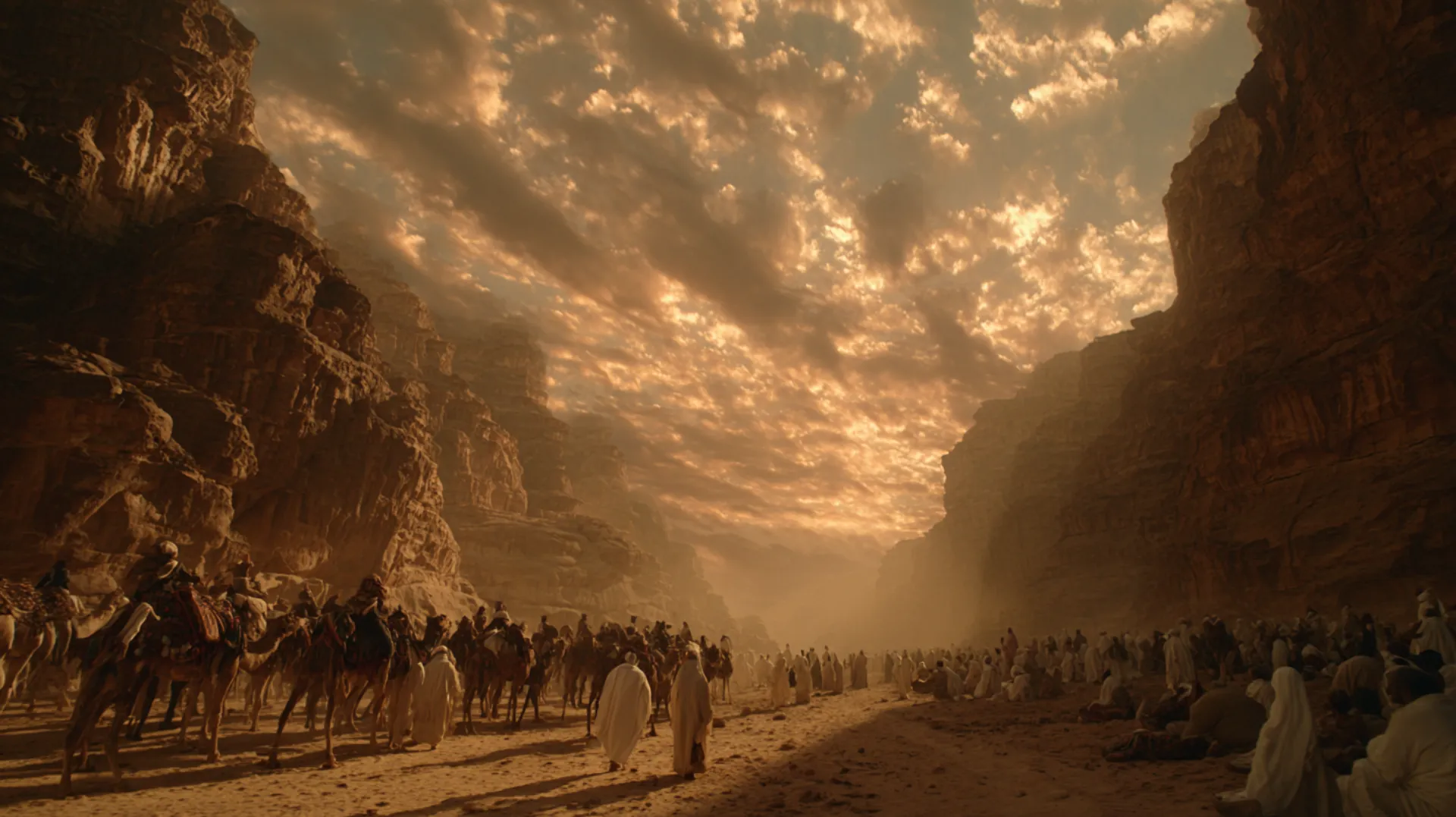
This was the precursor to everything that followed. The conquest of Mecca. The delegations of tribes streaming into Medina. The extinction of organized paganism from the Arabian Peninsula within a few short years. Ibn Shahab al-Zuhri, the towering scholar of the Tabi’in generation (d. 124 AH), would later observe: “There was no victory given to Islam before Hudaybiyyah greater than Hudaybiyyah itself. The people were at peace with one another, so they would mix and talk and mention Islam. And not a single intelligent person heard about Islam except that he entered it.” Ibn Hisham, editing Ibn Ishaq’s biography, offered the proof: at Bay’at al-Ridwan, there were 1,400 Muslims. Two years later, at the conquest of Mecca, there were 10,000. Where did those 8,600 come from? They converted during the peace.
Surah Al-Fath: Victory Defined
On the road back to Medina, Umar was consumed by regret. He rode up to the Prophet’s camel and offered salaam. No response. A second time. Silence. A third time—the maximum permitted before one must withdraw. Nothing. Umar thought the worst: “Let my mother mourn me. I am finished.”
Then a rider approached: the Prophet was calling him. Umar rode forward, bracing himself, and found the Prophet’s face radiant with joy. He was reciting:
“Indeed, We have given you a clear victory, that Allah may forgive you your sins—past and future—and complete His favor upon you and guide you to a straight path, and that Allah may aid you with a mighty aid.” (Al-Fath, 48:1-3)
The entire surah—four and a half pages—had descended in a single revelation, one of the rare instances of a complete surah arriving at once. It came neither in Mecca nor in Medina but on the open road, and it transformed the psychology of the entire community instantaneously.
Umar asked, incredulous: “Is this a victory?” The Prophet confirmed it. And Umar, the same man who hours earlier had questioned the treaty in anguished frustration, raced his camel up and down the lines of marching Muslims, crying out: “Allah has given us the greatest victory!”
The surah praised the Companions who had pledged at Ridwan—“Allah was pleased with the believers when they pledged allegiance to you under the tree” (Al-Fath, 48:18)—and promised them gardens beneath which rivers flow. It predicted imminent war spoils: “Allah has promised you much booty that you will take” (Al-Fath, 48:20), a prophecy fulfilled weeks later at Khaybar. And in its magnificent final verse, it offered one of the Quran’s most lyrical images of the Muslim community: a seed planted by a farmer, growing strong, standing firm on its stalk, delighting the sower—a metaphor for the Prophet nurturing his Companions and finding joy in what they had become.
The shift in the Companions’ morale was total. What had felt like defeat was now, by divine declaration, the clearest victory Islam had ever known. And history would prove the Quran right: Hudaybiyyah opened the door to peaceful da’wah, mass conversion, the neutralization of Khaybar, the writing of letters to world leaders, and ultimately the bloodless conquest of Mecca itself.
The Meaning Beneath the Pain
Perhaps the deepest lesson of Hudaybiyyah is one the Companions themselves articulated with painful honesty. Sahl ibn Hunayf’s confession—“If I could have rejected the command of the Prophet, I would have done so”—is not a mark of weak faith. It is the testimony of a man whose faith was strong enough to obey even when every fiber of his being screamed otherwise, and honest enough to admit the struggle decades later.
The treaty teaches that divine wisdom and human understanding do not always align in real time. The Companions could not see how returning Abu Jandal to his chains would lead to the Quraysh begging the Prophet to take Muslim converts. They could not foresee that a denied Umrah would produce a surah more beloved to the Prophet than everything on earth. They could not know that ten years of peace would accomplish what years of warfare never could: the conversion of the Arabian Peninsula.
As the Quran itself declares: “Perhaps you hate a thing and it is good for you; and perhaps you love a thing and it is bad for you. And Allah knows, while you do not know” (Al-Baqarah, 2:216).
The Muslims returned to Medina after six weeks away—twenty days camped at Hudaybiyyah, the rest in travel. They returned carrying not the satisfaction of tawaf but something far more consequential: a treaty that had, without a single sword being drawn, elevated them from a besieged community to a recognized state, divided the peninsula into two ideological camps, and set the clock ticking toward the fall of Mecca. Within weeks, the Prophet would turn his attention northward, toward the fortresses of Khaybar, where the remnants of the Banu Nadir waited behind walls of stone—and where the promise of Surah al-Fath would begin to unfold in ways no one at Hudaybiyyah could yet imagine.
Quranic References
Continue Your Journey

Cite this Narrative
APA
SeerahQuest. (2026). The Treaty That Conquered Without a Sword. *SeerahQuest: The Eternal Narrative*. https://seerahquest.com/chapters/hudaybiyyah-the-treaty-its-companions-and-quranic-revelation Adapted from Yasir Qadhi's Seerah Series, Episode 66.
MLA
"The Treaty That Conquered Without a Sword." *SeerahQuest: The Eternal Narrative*, 2026, https://seerahquest.com/chapters/hudaybiyyah-the-treaty-its-companions-and-quranic-revelation. Adapted from Yasir Qadhi's Seerah Series, Episode 66.
Chicago
"The Treaty That Conquered Without a Sword." *SeerahQuest: The Eternal Narrative*. Accessed April 3, 2026. https://seerahquest.com/chapters/hudaybiyyah-the-treaty-its-companions-and-quranic-revelation. Adapted from Yasir Qadhi's Seerah Series, Episode 66.
Install SeerahQuest — read chapters offline, anytime.